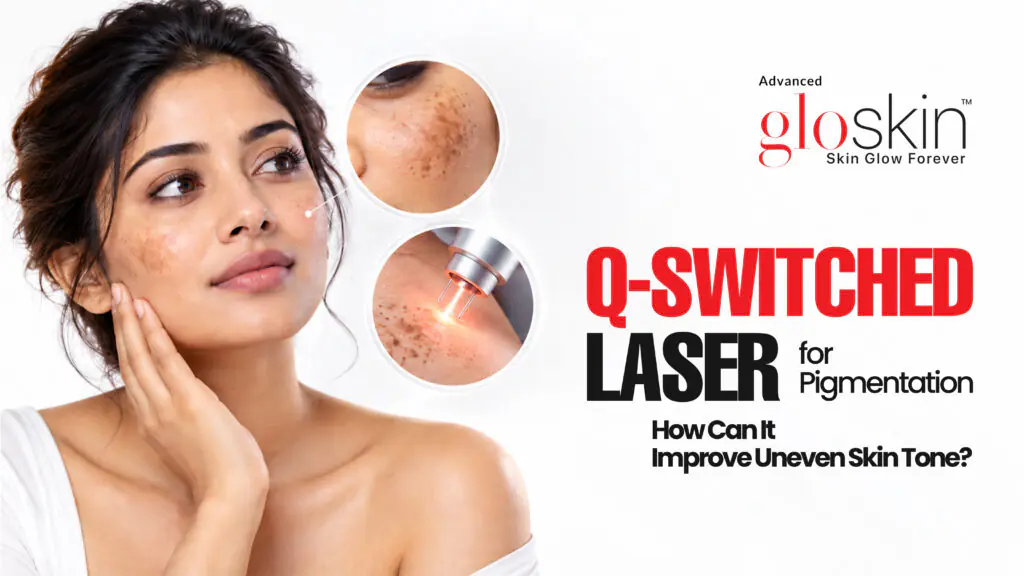
Q-Switched Laser for Pigmentation: How Can It Improve Uneven Skin Tone?
Consultant Dermatologist
What Is Q-Switched Laser Treatment?
Q-Switched laser is a type of laser technology that delivers energy in very short pulses.
These pulses are directed at areas where excess pigment is present. The pigment absorbs the laser energy and breaks into smaller particles, which the body may gradually clear over time.
The same technology may also be used in selected tattoo removal treatments because both pigmentation and tattoo ink involve pigment particles. However, the settings and treatment approach are different depending on what is being treated.
In pigmentation cases, the goal is not simply to “remove colour.” The treatment needs to be planned carefully so that the surrounding skin is protected as much as possible.
What Skin Concerns Can Q-Switched Laser Address?
Q-Switched laser may be considered for certain pigmentation concerns, but it is not suitable for every dark patch or uneven area.
Depending on the skin assessment, it is used for:
- Certain types of pigmentation
- Dark spots
- Sun-related pigmentation
- Post-acne marks
- Uneven skin tone
- Selected superficial pigment concerns
People looking for a dark spot treatment or laser treatment for dark spots often assume that laser is the obvious solution. In reality, the cause of the pigmentation matters just as much as how it looks.
For example, melasma can behave differently from simple sun spots or post-inflammatory pigmentation. It may be influenced by hormones, sun exposure, heat, and skin sensitivity, which means treatment often needs to be more carefully planned.
How Does Q-Switched Laser Work on Pigmentation?
The laser sends short bursts of energy into the targeted pigment.
When the pigment absorbs this energy, it breaks into smaller particles. These particles may then be gradually cleared through the body’s natural processes.
The treatment is designed to focus on the pigment while reducing unnecessary impact on the surrounding skin.
How well someone responds to laser pigmentation treatment can vary. Factors such as pigment depth, skin tone, skin types, sun exposure, and previous treatments can all influence the result.
This is why one laser setting cannot be used for every person.
What Happens During a Q-Switched Laser Session?
A session is usually fairly straightforward, but the exact process may differ from one clinic to another.
Skin Assessment
Before treatment begins, the skin is examined to understand the pigmentation pattern, possible causes, skin type, and treatment history. This step is important because not every case requires a pigmentation removal treatment using laser.
Treatment Preparation
The treatment area is usually cleansed, and protective eyewear is used during the procedure. Depending on the area and the person’s sensitivity, additional preparation may also be advised.
Laser Application
The laser is applied to the targeted areas using controlled pulses. Some individuals have reported the experience as a snapping or warming sensation. The level of discomfort can vary depending on the area being treated and the settings used.
Post-Treatment Care
After the session, mild redness, warmth, or sensitivity may be noticed. The skin professional may recommend sunscreen, moisturiser, gentle skincare, and temporary avoidance of certain active products.
Who May Be Suitable for Q-Switched Laser Treatment?
Q-Switched laser may be suitable for people with selected pigmentation concerns, but suitability should be decided after examining the skin.
A professional may consider factors such as:
- Type of pigmentation
- Depth of the pigment
- Skin tone and skin type
- History of pigmentation
- Previous treatments
- Current skincare
- Sun exposure
- Medical history
If you are visiting a skin pigmentation clinic in Chennai, the consultation should focus on understanding why the pigmentation developed in the first place.
In some cases, topical treatment, chemical peels, other procedures, or a combination of treatments may be more appropriate than laser alone.
How Many Sessions May Be Needed?
It varies from one individual to another and hence there is no fixed number.
Some pigmentation concerns may need several sessions, while others may respond differently depending on the depth and nature of the pigment.
The number of sessions can depend on:
- Type of pigmentation
- Size of the area
- Depth of pigment
- Skin response
- Laser settings
- Sun exposure
- Previous treatment history
A personalised Treatment plan is usually created after the skin has been assessed.
It is also worth keeping expectations realistic. Pigmentation often improves gradually, and visible changes may take time.
What Should You Expect After the Treatment?
The skin may look slightly different immediately after treatment.
Some people may notice:
- Mild redness
- Temporary warmth
- Slight sensitivity
- Mild dryness
- Temporary darkening of the treated spots
These changes are usually related to how the skin responds to the laser, and they can vary from person to person.
Moreover, your skin may require some time to recover between treatments in order for the results to be assessed.
Can Q-Switched Laser Be Combined With Other Skin Treatments?
Yes, in some cases.
Pigmentation often has more than one contributing factor, so treatment may involve more than a single procedure.
Depending on the skin concern, a professional may combine Q-Switched laser with:
- Prescription or professional skincare
- Chemical peels
- Sun protection measures
- Acne-focused treatment
- Other pigmentation procedures
For conditions like melasma, a combination approach may sometimes be more appropriate because the pigmentation can be influenced by ongoing triggers.
An uneven skin tone treatment plan should therefore be based on the individual rather than using the same approach for everyone.
How Should You Take Care of Your Skin Post-Laser Procedure?
Aftercare is an important part of the treatment.
A few simple measures can help support the skin while it recovers:
- Apply broad-spectrum sunscreen regularly.
- Avoid excessive sun exposure.
- Do not rub or scratch the treated area.
- Use gentle skincare products.
- Keep the skin moisturised.
- Avoid strong active ingredients unless advised.
- Follow the clinic’s aftercare instructions.
Sun protection is especially important because UV exposure can trigger pigmentation again.
Even after a pigmentation removal treatment, dark spots can return if the underlying cause or trigger is still present.
Conclusion
Q-Switched laser may be considered for selected pigmentation concerns and uneven skin tone, but it is not a one-size-fits-all treatment. The right approach depends on the type of pigmentation, how deep it is, what is causing it, and how the skin is likely to respond. If you are considering Q-Switched laser treatment in Chennai or looking for pigmentation treatment in Chennai, getting your skin properly assessed first can help you understand whether laser is suitable or whether another treatment approach may be more appropriate.
Frequently Asked Questions
What is Q-Switched laser treatment used for?
It may be used for selected pigmentation concerns, dark spots, uneven skin tone, and certain pigment-related skin concerns after professional assessment.
Is Q-Switched laser suitable for every type of pigmentation?
No. Pigmentation can develop for different reasons, and some conditions, such as melasma, may need a different or combined treatment approach.
How many Q-Switched laser sessions are needed?
The number of sessions varies based on the type of pigmentation, its depth, the treatment area, and how the skin responds.
Can pigmentation return after laser treatment?
Yes. Pigmentation may return due to sun exposure, hormonal factors, inflammation, or other underlying triggers. Ongoing skincare and sun protection remain important.
Is there downtime after Q-Switched laser treatment?
Downtime can vary. Some people may notice temporary redness, warmth, sensitivity, or darkening of the treated area.
Book An Appointment