Can Oily Scalp Cause Hair Loss? Myths & Facts
Consultant Dermatologist
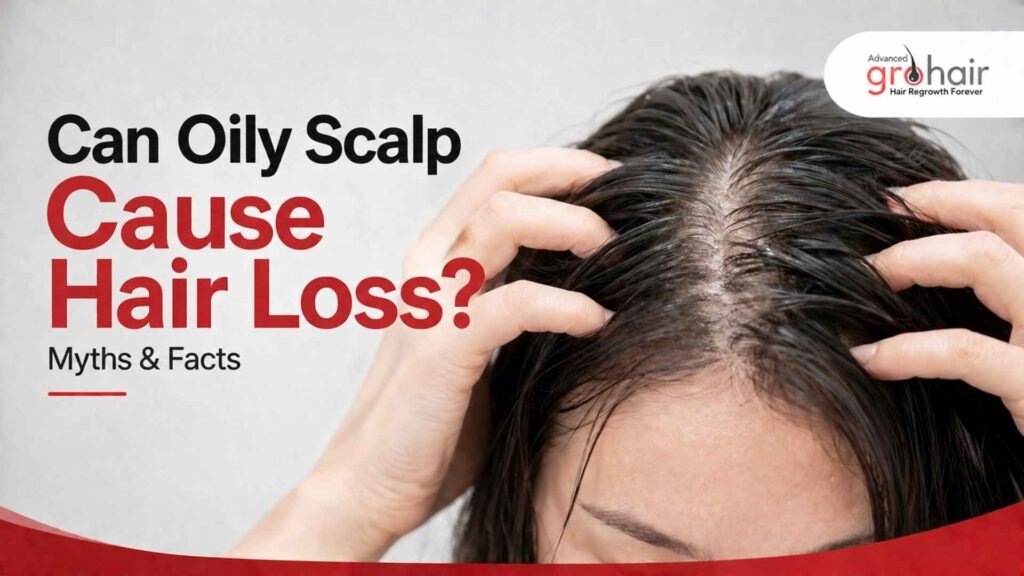
If you have an oily scalp, you may wonder whether it is responsible for your hair loss or thinning hair. While an oily scalp does not usually directly cause hair loss, excessive sebum can create an unhealthy environment that affects the hair and scalp.
This may contribute to increased hair shedding, inflammation, dandruff, and clogged follicles, all of which can affect overall hair health.
Understanding the cause of your symptoms is important because the right treatment plan depends on the underlying condition rather than the oiliness itself.
What Is an Oily Scalp?
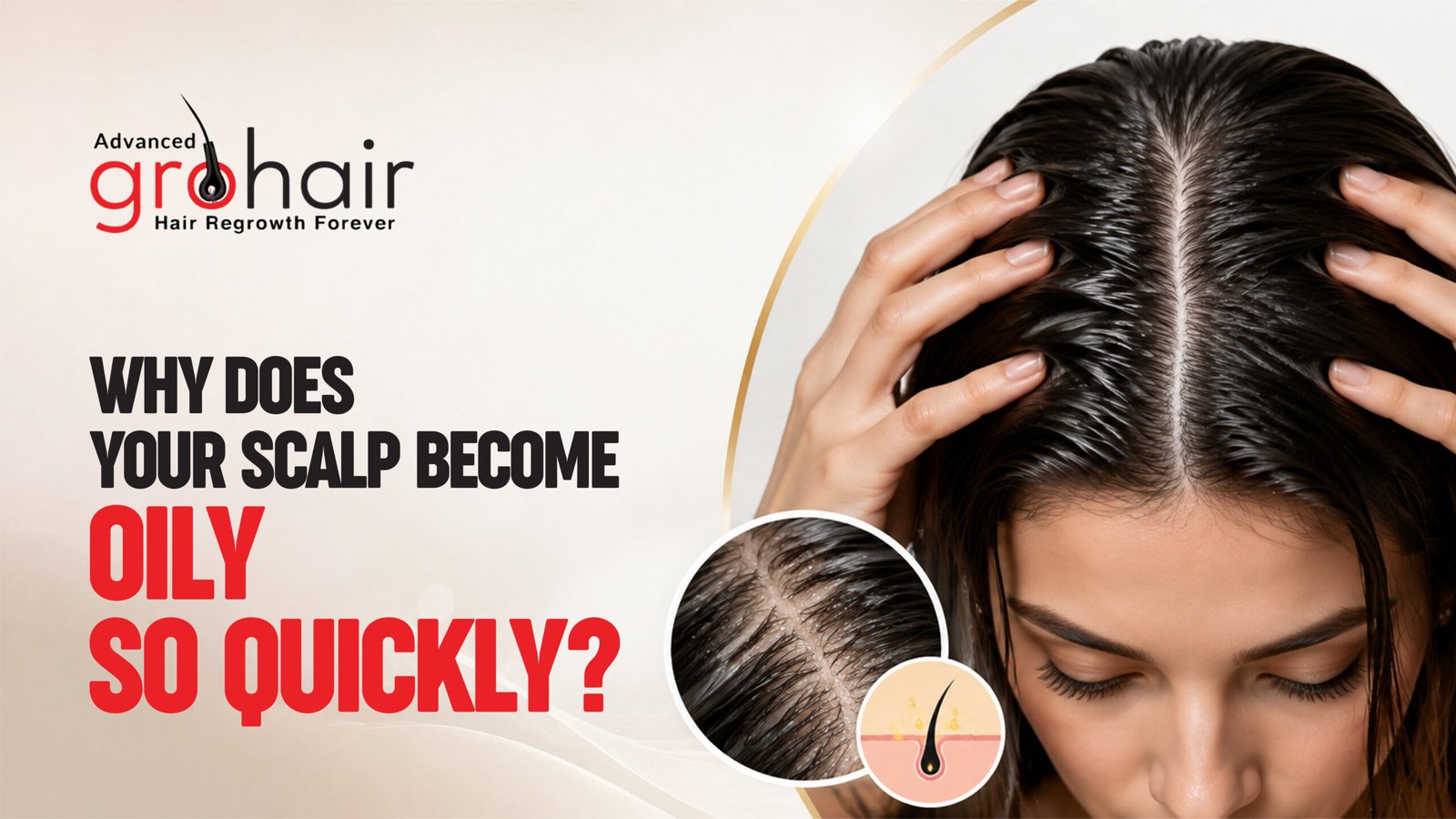
An oily scalp develops when the sebaceous glands produce too much sebum, a natural oily substance that protects the skin and hair.
Normally, sebum keeps the scalp moisturised. However, excessive sebum production or increased scalp oil production can result in oily hair, a greasy scalp, and noticeable scalp oiliness.
Genetics, hormones, climate, and daily habits can all influence how much oil your scalp produces.
Can an Oily Scalp Cause Hair Thinning?
An oily scalp does not usually directly cause hair loss, but it can create conditions that interfere with hair growth and follicle health. In other words, an oily scalp can contribute to problems that may increase hair fall or shedding.
Excess Sebum Build-Up
When too much sebum accumulates on the scalp, it can trap sweat, dirt, and debris around the hair roots. This may affect overall scalp health and make the scalp more prone to irritation.
Clogged Hair Follicles
Oil mixed with dead skin and styling residue can lead to clogged hair follicles. Although this does not always stop hair growth, it may affect the normal function of each hair follicle and contribute to unhealthy scalp conditions.
Seborrheic Dermatitis
Seborrheic dermatitis is a common inflammatory condition linked to excess oil production. It often causes redness, scaling, dandruff, and scalp inflammation. If left untreated, persistent inflammation may contribute to hair loss.
Dandruff and Itchy Scalp
An itchy scalp caused by dandruff can lead to repeated scratching. This may weaken hair strands, increase breakage, and affect the overall appearance of your hair.
Scalp Psoriasis and Other Scalp Conditions
Unlike dandruff, scalp psoriasis is an autoimmune condition that causes thick, scaly plaques. It can affect the health of your hair if inflammation becomes severe.
Male Pattern Baldness and Genetic Hair Loss
Male pattern baldness is one of the most common types of hair loss and is primarily genetic. Although there is ongoing research into sebum and hair loss, excess oil alone does not cause pattern hair loss or male pattern baldness.
Poor Hair Care and Product Build-Up
Infrequent cleansing, heavy hair products, and habits that cause an oily scalp or worsen scalp oiliness can increase product build-up and make the scalp feel heavier and greasier.
Signs Your Oily Scalp May Be Affecting Hair Health
Your oily scalp and hair loss concerns may be related if you notice:
- Persistent greasy hair
- Increased hair fall
- Excessive hair shedding
- Visible thinning of the hair
- Reduced hair density
- Persistent dandruff
- An itchy scalp
- Redness or scalp inflammation
- Hair becoming limp or difficult to manage
How Hair Specialists Diagnose Hair Loss
A specialist will first determine whether your symptoms are caused by excess oil or another condition.
Assessment may include:
- Medical history review
- Examination of the hair and scalp
- Scalp analysis
- Trichoscopy
- Hair pull test
- Blood investigations where necessary
- Scalp biopsy in rare cases
This helps identify the exact cause of hair loss before treatment begins.
Treatment Options for Oily Scalp and Hair Loss
The best approach depends on the underlying diagnosis. Managing oil production and treating scalp disorders can support healthy hair growth.
Medicated Shampoo
Choosing the right shampoo is essential. Depending on the condition, your doctor may recommend ingredients such as ketoconazole, selenium sulphide, zinc pyrithione, or salicylic acid.
Managing an Oily Scalp
Managing an oily scalp involves keeping the scalp clean without stripping the scalp of its natural oils. Washing too aggressively can sometimes increase oil production.
Prescription Hair Treatments
Where appropriate, doctors may prescribe topical medications, minoxidil, or anti-inflammatory treatments to manage hair loss.
Treating Seborrheic Dermatitis and Scalp Infections
When seborrheic dermatitis or fungal infections are present, antifungal medications and anti-inflammatory therapy can improve symptoms and reduce ongoing irritation.
Advanced Hair Restoration Treatments
Patients with persistent hair loss problems may benefit from advanced hair treatments, including:
- PRP Therapy
- Mesotherapy
- Low-Level Laser Therapy
- Hair transplant surgery for suitable candidates with advanced hair loss
Hair Care Tips for Managing an Oily Scalp
Simple daily habits can improve your scalp condition.
- Follow a balanced hair care routine.
- Choose a suitable shampoo for your scalp type.
- Avoid over-cleansing while washing your hair.
- Limit heavy styling products.
- Keep the scalp clean.
- Apply conditioner only to the ends of your hair.
- Consider an occasional scalp massage.
- Eat a balanced diet to support healthy hair.
Can You Prevent Hair Loss If You Have an Oily Scalp?
Hair loss due to an oily scalp is a common complaint, but good scalp care can help reduce many of the risk factors.
You can help prevent hair loss by:
- Maintaining a healthy scalp
- Reducing excess sebum
- Treating dandruff promptly
- Following a consistent routine
- Avoiding habits that increase scalp oil production
When Should You Consult a Hair Specialist?
Arrange an appointment if you experience:
- Persistent hair loss
- Excessive hair fall
- Noticeable hair thinning
- Severe dandruff
- Painful scalp inflammation
- Persistent itching
- No improvement despite using a medicated shampoo
- If you suffer from oily hair together with ongoing shedding
The reason for the hair loss can be diagnosed with a professional assessment at a hair clinic, and proper treatment can be suggested accordingly.
Myths vs Facts
|
Myth |
Fact |
|
An oily scalp can cause permanent baldness in everyone. |
An oily scalp alone does not usually directly cause hair loss, but it may contribute to scalp disorders. |
|
Daily washing causes hair loss. |
Using the right shampoo at the correct frequency helps maintain scalp health. |
|
Applying more oil reduces sebum production. |
Hair oils do not regulate sebum production. |
|
Every oily scalp needs medical treatment. |
Mild oiliness is normal. Treatment is only needed when symptoms affect the scalp or hair growth. |
Conclusion
An oily scalp does not usually directly cause hair loss, but excess sebum, clogged hair follicles, seborrheic dermatitis, dandruff, and other scalp disorders can increase hair shedding and affect normal hair growth.
Maintaining good scalp hygiene, choosing the right shampoo, and following a consistent hair care routine can improve overall hair health.
If you are struggling with oily hair or persistent hair loss, visit a hair clinic for a professional scalp analysis and a personalised treatment plan.
Frequently Asked Questions
Can an oily scalp cause permanent hair thinning?
Not usually. An oily scalp may worsen certain scalp conditions, but permanent hair loss is more commonly linked to genetics or medical conditions.
Does excess sebum clog hair follicles?
Yes. Excess sebum mixed with dirt and styling residue can contribute to clogged hair follicles.
How often should I wash an oily scalp?
This depends on your scalp type, but most people with an oily scalp benefit from regular cleansing using a suitable shampoo.
Can dandruff lead to hair thinning?
Persistent dandruff and scratching may contribute to increased hair shedding, although dandruff itself is not a direct cause of permanent hair loss.
Is an oily scalp a sign of hair loss?
Not necessarily. Oiliness alone does not indicate hair loss, but ongoing shedding should be assessed by a specialist.
Can PRP therapy help with hair thinning?
PRP may help suitable patients with certain forms of hair loss by supporting follicle function and improving overall hair quality.
Book An Appointment