Why Do Some People Develop Bald Patches Suddenly? Causes & Treatment
Consultant Dermatologist
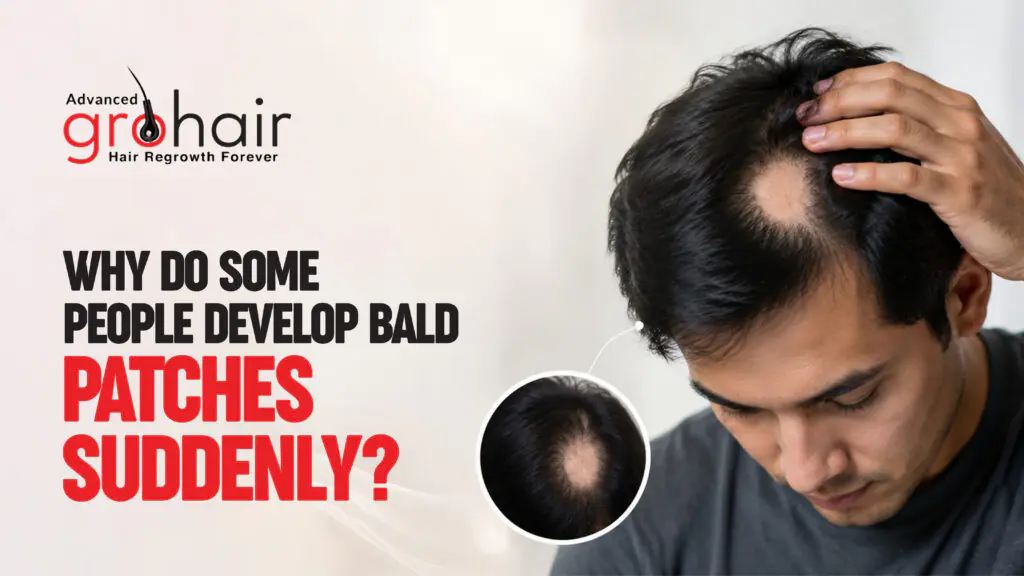
Spotting a bald patch on your scalp can feel pretty unsettling, mainly when it seems to show up all of a sudden. When compared with gradual hair thinning, sudden bald patches usually look like a well-defined region where the hair has gotten thinner, or just sort of gone away in a short span of time, kind of abruptly.
Sure, it’s normal to shed hair now and then, but sudden hair loss in specific spots can be a clue that something deeper is going on—maybe with your scalp, or related to your overall health. Stuff like alopecia areata , scalp infections, physical irritation or damage to the skin, or certain medical factors can all play a part in how these bald patches appear.
Getting a handle on why the patches show up in the first place is often the very first step toward choosing an approach that actually helps manage hair loss and encourages healthier, steadier hair growth.
What Is Patchy Hair Loss?
Patchy hair loss is when hair starts thinning in certain parts of the scalp only , so it not really like the whole head goes at once. You might notice these areas as small round spots, uneven irregular patches, or even kind of obvious gaps in the hair density, like the hair just doesn’t fill in the same.
Some common things you might see with patchy hair loss include:
- Localized patches where hair is missing: Usually hair is gone in certain spots on the scalp, while the nearby areas can look normal enough.
- Round or irregular bald areas: Some people spot smooth, coin-shaped bald patches, but others get more uneven sections.
- Sudden shifts in hair thickness: You may notice that hair looks thinner in one area over a couple of days or weeks, kind of all at once.
Also a sudden bald spot does not always mean this is permanent hair loss. A lot of times the hair follicles are still working, and hair can come back after the actual trigger is found and handled properly.
What Causes Sudden Bald Patches?
There are lots of possible causes for sudden bald patches on the scalp. Pinpointing the exact reason is kinda important because the treatment, it really depends on what is going on with the hair follicles, you know.
Alopecia Areata
One of the most common reasons for sudden patchy hair loss is alopecia areata. It is one of the most frequent causes of sudden, patchy hair loss is alopecia areata. It’s an autoimmune kind of deal where the immune system, somehow by mistake, goes after healthy hair follicles, so hair starts to shed in certain spots.
Alopecia areata is actually pretty common, and it can show up in people of different ages. Usually you’ll see smooth, round areas where hair is missing on the scalp , but sometimes it can also affect eyebrows, eyelashes, or other body hair.
In some cases people notice smaller, mild spots, while others end up with broader patterns, such as alopecia totalis (loss of all scalp hair) or alopecia universalis (loss of scalp and body hair).
Scalp Infections
Some scalp infections, including fungal infections, can disturb the scalp environment and interfere with regular hair growth. These infections may bring on:
- Hair breakage
- Itching
- Scaling
- Redness
- Thinning areas
A scalp infection usually needs a proper assessment, because treating only the hair loss without handling the infection might not help , or may even make things drag on.
Physical or Chemical Damage
Hair follicles can get hit by repeated physical or chemical stress too, though it’s kind of indirect sometimes. Too much heat styling, tough chemical treatments, tight hairstyles, or aggressive hair handling may lead to breakage and thinning in certain spots.
In these cases, the hair shedding may be more about damage to the hair shaft rather than a true issue with the hair follicle itself.
Certain Medical Conditions
Some health conditions, nutrient shortfalls, shifts in hormones, or specific medications may cause sudden hair loss. The pattern and how severe it becomes can be different for each person.
So, that’s why knowing the full health history is an important piece of hair loss diagnosis, and usually not optional.
How Is Patchy Hair Loss Different From Pattern Hair Loss?
Patchy hair loss and pattern hair loss are kinda different things, even if both seem to mess with the scalp. They behave in their own way, and it can look very different day to day, too.
Pattern hair loss, like male or female pattern baldness, tends to show up slowly, over time. Usually it follows pretty recognizable trends, so thinning often starts near the hairline, or around the crown, and sometimes the overall hair density just keeps getting less, bit by bit.
Patchy hair loss is more like separate, clearly defined areas where hair is gone or reduced a lot. In those cases, the hair around the spots can look relatively normal, and then one or more bare areas show up, sometimes more noticeably and more suddenly than people expect.
For example :
Pattern hair loss: Gradual thinning across months or years
Patchy hair loss: Visible bald areas showing up in specific spots
Pattern hair loss: Commonly tied to genetics and hormones
Patchy hair loss: Commonly it’s autoimmune condition may rarely connect to other trigger factors.
Because the causes aren’t the same, the way to handle treatment can also vary a lot.
What Symptoms Should You Look For?
A sudden bald patch can look a bit different, depending on what’s actually causing it.
Some of the hints that might need your attention, include a few things such as:
- Smooth bald patches on the scalp
- Itching, irritation, or scaling
- Redness or inflammation
- Broken hairs around the affected area
- Sudden increase in hair shedding
- Changes in nails in some conditions, especially alopecia areata
Some people might spot one abrupt bald patch, while others go on to get a few separate areas over time. Figuring out when the hair loss actually began, plus if it seems to be spreading, can make things easier during a professional checkup, and honestly it helps the specialist get the full picture.
Can Bald Patches Grow Hair Again?
Whether a bald patch can grow back depends on the cause, condition of the hair follicles, and how early the issue is identified.
In conditions like alopecia areata, the hair follicle is usually not permanently destroyed. This means hair may regrow in some cases after appropriate management.
However, recovery can vary. Some people may experience natural regrowth, while others may require medical treatment to support hair regrowth and manage the underlying condition.
Factors that influence recovery may include:
- The size and number of bald patches
- Duration of hair loss
- Overall scalp health
- Presence of other symptoms
- Response to treatment
A proper evaluation can help determine the most suitable approach.
How Is the Cause of Patchy Hair Loss Diagnosed?
A product that works well for dry hair may not suit an oily scalp.
Heavy shampoos, rich conditioners, and thick styling products can leave residue near the roots, making the scalp appear greasy faster.
Choose products based on your scalp condition rather than only your hair texture.
Scalp Examination
A close scalp examination helps in judging the state of the skin, the hair follicles, and the spots where hair is missing. Doctors may watch for signs of inflammation or infection, and also any shifts around the hair roots , kind of like small changes you might not notice.
Medical History
Details about recent sickness, stress levels, medications, family history, daily habits, plus any earlier hair issues can give useful hints. Even things that seem unrelated sometimes matter.
Hair and Scalp Assessment
A careful evaluation of the hair and scalp can clarify the hair loss pattern and whether the follicles are still “working” or if they’re quieter than normal.
Additional Tests When Required
If needed, extra tests may be suggested to rule out or confirm underlying problems, nutritional deficiencies, or other contributors to patchy hair loss.
Getting an accurate diagnosis is what prevents unnecessary treatments and keeps attention on the real cause, rather than guessing in the dark.
Treatment Options for Patchy Hair Loss
Treatment for patchy hair loss really depends on what’s behind it. There isn’t one neat solution that fits every kind of bald patch, because each case can be totally different.
So, depending on the diagnosis, the treatment options might be things like :
- Medical treatments for conditions such as alopecia areata
- Helping manage scalp infections
- Dealing with nutritional issues or other health-related factors
- Scalp care advice that matches what you’re seeing
- Hair growth therapies that support healthy follicles, when those are actually suitable
A hair specialist will often suggest a tailored plan after looking closely at the scalp condition and the hair follicles, because it’s not just about thinning
The aim is not only to make the bald patches look better, but also to understand the cause of the hair loss and treat that reason too.
When Should You See a Hair Specialist?
A new bald patch can sometimes get better by itself, but honestly its still better to ask a professional, especially when
- Hair loss starts up suddenly
- The bald area is getting bigger
- More than one patch is forming, at once or slowly
- You notice itching, redness, or scalp discomfort
- Hair loss comes along with changes in your nails
- You keep getting these patchy episodes again and again
Getting an early look can help clarify what is causing it and raise the odds of better, more workable management.
Conclusion
Sudden bald patches can be surprising and concerning, but they do not always mean permanent hair loss. Conditions like alopecia areata, scalp infections, and other factors can affect hair growth in specific areas.
The most important step is identifying the underlying cause rather than focusing only on the visible bald spot. A professional scalp assessment and timely hair loss diagnosis can help determine the right management approach.
If you notice sudden patchy hair loss, changes in scalp condition, or new bald patches on the scalp, consulting a hair specialist can help you understand the reason and explore suitable treatment options.
Frequently Asked Questions
What causes sudden bald patches?
Sudden bald patches can occur due to various reasons, including androgenetic alopecia areata, scalp infections, physical damage, nutritional issues, or certain medical conditions. A proper diagnosis helps identify the exact cause.
Can hair grow back on bald patches?
Yes, hair may regrow in some cases, depending on the cause of hair loss and the condition of the hair follicles. Recovery varies from person to person.
Is patchy hair loss the same as male pattern baldness?
No. Patchy hair loss appears as distinct bald areas, while male or female pattern baldness usually develops gradually with overall thinning in specific areas.
What are the symptoms of alopecia areata?
Common symptoms include smooth round bald patches, sudden hair loss in specific areas, broken hairs, and sometimes changes in nails.
How are bald patches diagnosed?
A hair specialist may evaluate your scalp, review your medical history, examine hair growth patterns, and recommend additional tests if required.
Can stress cause bald patches?
Stress may contribute to certain types of hair shedding, but sudden bald patches can have several possible causes. Identifying the underlying reason is important.
When should I see a hair specialist for bald patches?
You should consult a specialist if bald patches appear suddenly, increase in size, return repeatedly, or are accompanied by itching, redness, or scalp discomfort.
Book An Appointment