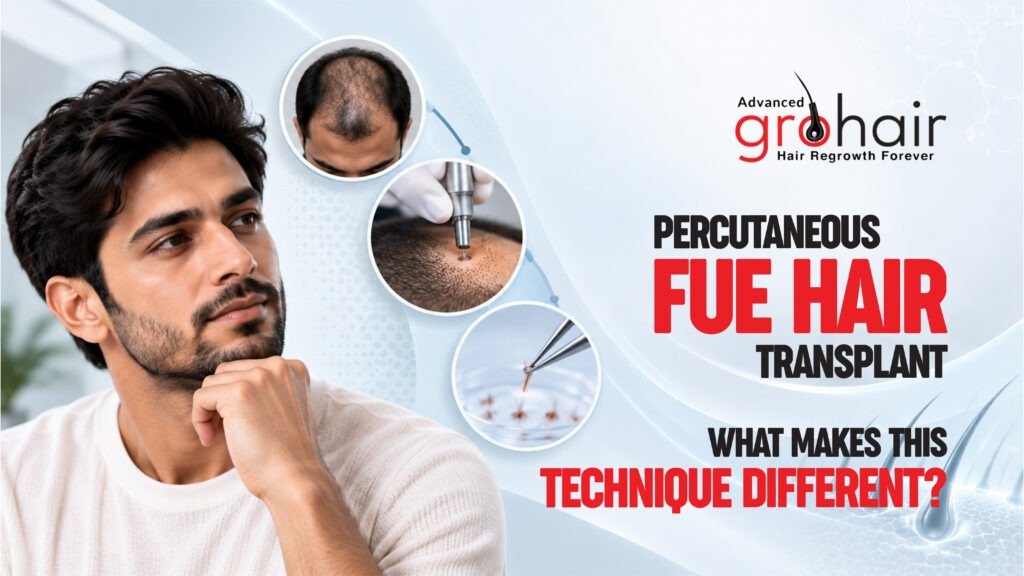
Percutaneous FUE Hair Transplant: What Makes This Technique Different?
Consultant Dermatologist
What Is Percutaneous FUE Hair Transplant?
Percutaneous FUE is a hair transplant process in which individual hair follicles are surgically removed from an area of the body that has healthy hair and then transplanted into an area that experiences hair loss or balding.
While FUT was traditionally done by removing a strip of tissue from the scalp, FUE uses the extraction of individual follicular units. In percutaneous FUE, holes are made on the recipient area before hair transplantation can take place.
This procedure aims at having a controlled way of implanting hair grafts taking into consideration factors like hair direction and angle.
How Does Percutaneous FUE Work?
Successful hair transplantation includes several stages. Every stage is crucial for maintaining the integrity of the grafts and facilitating natural hair growth.
Donor Area Assessment
Prior to the procedure, the surgeon assesses the donor area, including the density of hair and their follicles.
The assessment helps determine:
- The number of grafts required
- The quality of available hair follicles
- The expected coverage area
- A suitable treatment plan based on the pattern of hair loss
Donor hair that is healthy contributes significantly to attaining good hair transplant outcomes.
Individual Follicle Extraction
In the process of FUE, individual follicular units are harvested from the donor site through specialised techniques. The extraction of individual follicles is mainly aimed at maintaining the integrity of follicular structure so that the extracted grafts can be used in the transplantation process.
Graft Preparation
Following the harvesting of grafts, preparation should take place where the prepared grafts are sorted based on certain aspects such as:
- Number of hairs per graft
- Placement
- Desired density
Recipient Area Preparation
Prior to the placement of hair grafts, it is necessary to plan the recipient site by forming small openings for hair implants. This planning will help the surgeon create a natural pattern rather than implanting hairs at random.
Precise Graft Implantation
The prepared grafts are placed into the recipient area with attention to the natural growth pattern of existing hair.
The precision of implantation helps create a more natural hairline and balanced density.
How Is the Hairline Designed Before Treatment?
Hairline design is a vital step in a hair transplant procedure. The hairline has to blend with the face in order to look realistic and not artificial.
Before treatment, the surgeon considers factors such as:
- Age and facial structure
- Existing hair pattern
- Future hair loss possibilities
- Available donor hair
A unique hairline design ensures that the transplant hair will match the rest of the hair.
Why Do Graft Direction and Angle Matter?
The direction and angle of implanted follicles play a major role in the final appearance of transplanted hair.
Natural hair does not grow straight upward. It follows specific patterns depending on the scalp area. During a percutaneous hair transplant, graft placement is planned to match these natural growth patterns.
Correct angle and direction can help:
- Improve the natural appearance of transplanted hair
- Create better blending with existing hair
- Maintain proper hair flow
- Avoid an unnatural look
The skill and experience of the hair transplant surgeon are important factors in achieving these details.
Who May Be Suitable for Percutaneous FUE?
FUE may be used percutaneously in people having various types of hair loss according to the condition of their scalp and availability of donor hair.
A person may be evaluated for this technique if they have:
- Pattern hair loss
- Thinning areas on the scalp
- Receding hairline concerns
- Sufficient healthy hair follicles in the donor area
However, suitability varies from person to person. Hair loss patterns should be evaluated and the health of the scalp determined during an appointment with a competent surgeon.
What Is Recovery Like After Percutaneous FUE?
The process of recovering after a percutaneous hair transplant is normally gradual, since the scalp takes some time to heal and get used to the treatment.
Initial Redness
Redness, swelling, and sensitivity may appear in the treated areas in the first days after treatment. These symptoms will subside with time.
Scalp Healing
Extraction and implantation sites heal slowly. Proper healing can be achieved by following post-treatment recommendations.
Return to Routine
Many individuals can return to daily activities within a short period, depending on their recovery progress and the guidance provided by their surgeon.
Early Shedding and Growth Stages
It is common for transplanted hair to go through an initial shedding phase after the procedure. This does not necessarily indicate treatment failure, as new growth occurs gradually as follicles enter the growth cycle.
When Does New Hair Growth Become Noticeable?
Hair growth after transplantation happens gradually. This process may take different time periods for different individuals based on how well their body heals.
Generally:
- Initial changes may be noticed after a few months
- Visible improvement develops gradually
- Final results may take several months as transplanted follicles continue to grow
Patience and appropriate aftercare are critical components in the process of hair restoration.
What Factors Affect the Final Result?
There are various influencing factors for the result of a hair transplant that include:
Donor Hair Quality
The quality of hair follicles that are available to the donor can play a role in the final coverage.
Number of Grafts
The amount of hair grafts to be used will depend on the degree of hair loss and other factors.
Hair Loss Pattern
It is important to understand the pattern of hair loss before starting the procedure.
Graft Handling
Careful extraction, preparation, and implantation of grafts can affect follicle survival and overall results.
Individual Healing
Every person’s scalp responds differently after hair transplantation. Healing ability, lifestyle factors, and following post-treatment care instructions may influence recovery.
Conclusion
Percutaneous FUE hair transplant is a modern hair restoration method that places its emphasis on follicular unit extraction, meticulous grafting, and proper implantation. Such issues as the quality of donor hair, hairline design, grafting, and treatment aftercare all play a role in determining the final results.
A thorough consultation with a professional hair transplant surgeon may be instrumental in deciding on whether this procedure is right for you.
Frequently Asked Questions
Which hair transplant method is better: DHI, FUE, or Percutaneous FUE?
DHI, FUE, and Percutaneous FUE are different techniques. The suitable option depends on hair loss pattern, donor area quality, and individual goals.
What are the long-term results and what happens 10 years after a hair transplant?
Transplanted hair can provide long-lasting results, but natural hair loss may continue in untreated areas. Long-term outcomes depend on individual factors and care.
What are the advantages and disadvantages of Percutaneous FUE?
Percutaneous FUE allows individual follicle extraction and planned graft placement. Possible limitations include the need for sufficient donor hair and the fact that results depend on several factors, including surgeon expertise and individual healing.
What is the recovery process like after a Percutaneous FUE hair transplant?
Recovery may include temporary redness, scalp healing, and initial shedding. New hair growth usually develops gradually over the following months.
Which is better, DHI or FUE?
DHI and FUE are both hair restoration techniques with different methods of graft placement. The better choice depends on the individual’s hair loss condition, donor area, and treatment requirements.
Book An Appointment