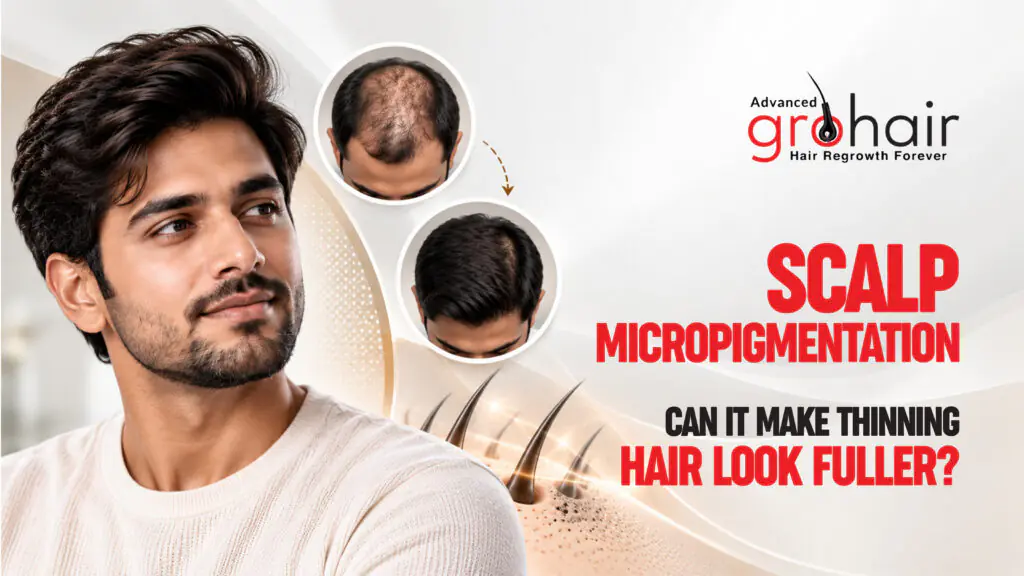
Scalp Micropigmentation: Can It Make Thinning Hair Look Fuller?
Consultant Dermatologist
What Is Scalp Micropigmentation?
Scalp micropigmentation, or SMP, is a cosmetic procedure that makes thinning areas look less noticeable.
Instead of adding hair, the procedure adds tiny pigment impressions to the scalp. These are placed to resemble very short hair follicles. When done carefully, the scalp can appear less visible, and the overall hairline may look more even.
People with crown thinning, a receding hairline, a visible scalp, or larger bald areas often consider SMP. It may also suit people who usually keep their hair very short. You may hear it described as a hair tattoo, but that is only a rough comparison. The pigment is placed differently, and the goal isn’t to create a design but to imitate the look of natural follicles.
One thing to keep in mind from the start: SMP does not grow new hair. It changes how thinning areas look.
How Does Scalp Micropigmentation Work?
Hair thinning becomes more noticeable because of the contrast between dark hair and the lighter scalp underneath.
SMP reduces some of that contrast.
Small pigment dots are placed in selected areas so the scalp doesn’t stand out as much. The work is usually built up over more than one session rather than made very dark in one sitting.
1. Scalp Assessment
Before anything else, the practitioner looks at the scalp and existing hair.
They may check where the thinning is most noticeable, how the hairline sits, whether there is scar tissue, and how much natural hair remains. This is also the point where expectations matter. For example, someone with mild crown thinning will need a very different approach than someone with advanced baldness and a shaved head. Hairline design also needs thought. If it’s too sharp, low, or too dark, it can look unnatural.
2. Pigment Selection
Choosing the right pigment is just as important as placing it correctly. A very dark shade may look obvious once the scalp heals, especially in daylight. The selected colour should sit naturally alongside the person’s hair and skin tone.
In many cases, a slightly softer shade looks more realistic than trying to match the darkest hair exactly.
3. Precise Pigment Placement
During SMP treatment, a fine needle places very small pigment dots into the scalp. The dots are not meant to look perfectly identical. Real hair follicles don’t follow an exact printed pattern, so spacing and size may vary slightly across the area. This helps the pigmentation blend in rather than look flat or artificial.
A numbing product may also be used before treatment if required.
4. Creating a Natural-Looking Appearance
SMP usually looks better when you build density slowly.
The first session may be kept fairly light. Later sessions can add more detail where the scalp still shows through. For people with thinning hair, the purpose is usually to make the spaces between existing hair less obvious. For someone with a shaved head, the goal may be to create the look of closely cropped hair across the scalp.
Who Can Consider Scalp Micropigmentation?
No single type of person chooses SMP.
Some people want their crown to look less thin. Others want a cleaner-looking hairline. Some prefer a non-surgical option.
People With Visible Scalp Areas
Hair does not need to be completely gone for the scalp to become noticeable.
Once there is more space between the strands, the skin underneath can start to show, especially under bright light. Pigment can be placed between these areas to reduce that visible gap. It doesn’t make each strand thicker, but it can make the scalp look more filled in.
Short-Haired Individuals
SMP can work particularly well with very short hair.
The pigment impressions can blend with closely cropped follicles, creating a more uniform appearance. It can also help someone who maintains a shaved head and wants a more defined hairline.
People With Certain Types of Hair Thinning
People with pattern baldness, crown thinning, receding hairlines, or certain forms of alopecia may consider SMP.
It may also be used around some scars, including those left after previous hair restoration procedures. That said, cosmetic coverage and medical treatment are not the same thing. If hair loss is sudden or continuing quickly, it is still important to understand why it is happening.
Individuals Wanting the Appearance of Greater Density
Many people who choose SMP are not completely bald.
They may still have a fair amount of existing hair but feel that the scalp shows too clearly through it. In these cases, scalp pigmentation can reduce visible spaces and create the impression of greater density. The amount of actual hair remains unchanged.
Can Scalp Micropigmentation Treat Hair Loss?
No. SMP does not treat hair loss itself.
It may improve the way thinning looks, but it does not restart hair growth or strengthen a weak follicle. This distinction matters. Imagine someone whose crown has started thinning. Hair is still present, but there are enough gaps for the scalp to show through. SMP can add pigment to those spaces, making the area look darker and more even. It can’t create a new follicle or stop pattern baldness from progressing.
That is why SMP for hair loss is better viewed as a cosmetic option. Hair-loss treatments may aim to manage the cause, reduce further shedding, or support hair growth.
Scalp micropigmentation works differently. Its role is mostly visual.
Scalp Micropigmentation vs Hair Transplant
SMP and a hair transplant often come up in the same conversation, but they are quite different.
Scalp Micropigmentation | Hair Transplant |
Uses pigment | Uses real hair follicles |
Improves the appearance of density | Restores hair in selected areas |
Non-surgical | Surgical |
Does not create new hair | Transplanted follicles can grow hair |
May need a future touch-up | Transplanted hair is intended to last long term |
Individuals looking for true hair restoration may be more interested in a transplant, while those who mainly want to reduce scalp visibility without surgery may prefer SMP.
How Long Does Scalp Micropigmentation Take?
Treatment time varies for everyone.
A small adjustment around the hairline usually takes less time than treating a large section of the scalp. Most people need more than one session because the pigment is built gradually.
The overall time may depend on:
- Size of the treatment area
- Amount of existing hair
- Degree of thinning
- Whether the crown or hairline is being treated
- Scar coverage
- How much density is required
There is often a gap between sessions so the scalp can settle before adding more pigment.
What Should You Expect After the Procedure?
Right after the procedure, the scalp may look a little red or feel slightly sensitive.
The pigment can also look darker than expected at first. This usually settles as the skin recovers.
For a short period after treatment, treat the scalp gently.
You may be advised to avoid:
- Heavy sweating
- Swimming
- Scratching the treated area
- Very hot showers
- Strong sun exposure
- Rubbing or scrubbing the scalp
Aftercare can vary from person to person, so follow the instructions given by the practitioner closely.
How to Maintain Scalp Micropigmentation
SMP can remain visible for several years, although it may gradually fade.
How quickly that happens varies from person to person. Skin type, sun exposure, scalp care, and lifestyle can all affect it. You may need a touch-up later if the pigment lightens or certain areas start to look uneven. Protecting the scalp from strong sunlight can also help maintain the appearance for longer.
For people with a shaved head, keeping the surrounding hair at a similar length often helps the pigmentation continue to blend naturally.
Conclusion
Scalp micropigmentation can make a noticeable difference when the main concern is a visible scalp, a thinning crown, a receding hairline, or a bald area. It does not add new hair, but it can make the scalp look less exposed by creating tiny follicle-like impressions. That is the key difference. SMP is a cosmetic treatment, not a cure for hair loss. If you’re comparing scalp micropigmentation with a hair transplant or another hair restoration option, a scalp assessment can help clarify which approach makes the most sense.
Frequently Asked Questions
What is scalp micropigmentation?
It is a cosmetic process that uses tiny pigment dots to make thinning or bald areas look denser.
How much does scalp micropigmentation cost in India?
The cost varies by area treated, number of sessions, and clinic. For scalp micropigmentation in Chennai, you usually need a consultation for an accurate estimate.
Is scalp micropigmentation safe?
SMP is minimally invasive when done using sterile equipment and proper technique. Mild irritation or pigment-related reactions can still occur.
Is SMP better than a hair transplant?
They serve different purposes. SMP improves the appearance of density, while a hair transplant uses real follicles to restore hair.
What happens during an SMP session?
The technician assesses the scalp, chooses the pigment shade, and places tiny dots across the required areas. You may need more than one session.
Book An Appointment