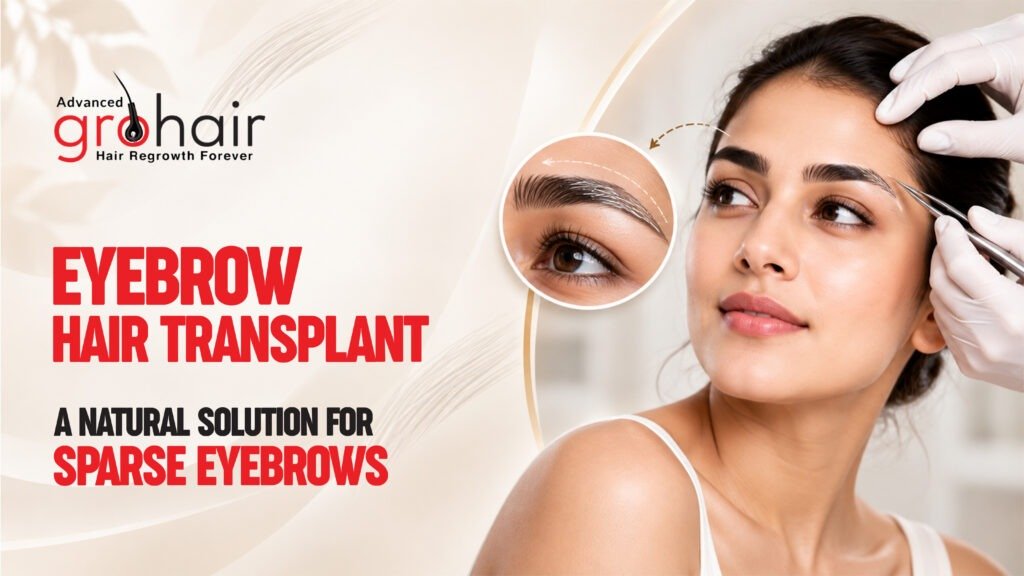
Eyebrow Hair Transplant: A Natural Solution for Sparse Eyebrows
Consultant Dermatologist
What Is an Eyebrow Hair Transplant?
An eyebrow hair transplant is a hair restoration procedure used to improve thin, patchy or partially absent eyebrows.
During the procedure, suitable hair is usually collected from a donor area on the scalp. These hair grafts are then placed into the eyebrow area based on the shape and density planned during consultation. Once the transplanted follicles settle, they may continue producing hair over the long term. Because donor hair often comes from the scalp, it may grow longer than normal eyebrow hair and may need trimming from time to time. The quality of the result does not depend only on the number of grafts.
Hair texture, graft angle, placement and eyebrow design also play an important role.
Why Do Eyebrows Become Sparse?
Eyebrow thinning may happen gradually or appear in certain areas. Common reasons include:
Genetics
Some people naturally have lighter or less dense eyebrows. The hairs may be fine or spaced further apart, even from a young age.
Over-Plucking
Frequent plucking over several years can affect some hair follicles. When the same hair is repeatedly removed, regrowth may become weaker in certain areas. This can eventually leave gaps or reduced eyebrow density.
Trauma or Scarring
Cuts, burns, surgery or other injuries around the brow may interfere with normal hair growth.
If scar tissue is present, the area needs to be examined before planning an eyebrow transplant because not every scar responds in the same way.
Age-Related Thinning
Eyebrow hair can become finer with age. Growth may slow down, and the individual strands can appear less noticeable than before, making the eyebrows look less full.
Other Causes of Eyebrow Hair Loss
Skin conditions, hormonal changes, nutritional factors and some medical conditions may also contribute to eyebrow hair loss. If thinning starts suddenly or continues without a clear reason, a medical assessment is usually more appropriate before considering a hair transplant.
Who May Benefit from Eyebrow Restoration?
An eyebrow transplant may be considered when eyebrow thinning is stable and the person has suitable donor hair.
It might be an option for people with:
- Naturally sparse eyebrows
- Uneven or patchy brow density
- Hair loss caused by repeated plucking
- Stable scars around the brow
- Partial eyebrow loss after an injury
- Thin eyebrow areas that do not grow back
- A preference for hair-based eyebrow restoration
The cause of hair loss still matters.
If eyebrow hair is actively falling or an underlying condition is affecting the area, that issue may need attention before surgery is planned.
A consultation can help determine whether eyebrow restoration is suitable.
For anyone considering an eyebrow transplant in Chennai, the assessment should ideally include both the eyebrow area and the donor hair rather than focusing only on the final brow shape.
How Is Eyebrow Hair Transplant Performed?
The exact technique may differ from one clinic to another, but the procedure generally follows a few basic stages.
Consultation and Eyebrow Design
The doctor first examines the existing eyebrow hair, donor area and skin condition. The eyebrow shape is then outlined according to the person’s facial features, natural brow position and desired density. This stage is important because the aim is not simply to add more hair. The new grafts should blend with the existing brow.
Donor Hair Selection
Suitable donor hair is selected from the scalp. Finer strands are often preferred because they tend to match natural eyebrow hair more closely.
Follicle Extraction
Individual hair grafts are very carefully removed from the donor area. Single-hair grafts are commonly useful for eyebrow restoration because eyebrow hair usually appears as fine individual strands rather than thick groups.
Implantation
The grafts are placed into the planned eyebrow area one at a time.
The doctor has to consider how each hair should sit, the angle at which it enters the skin and the direction it should follow. This matters because a graft can survive but still look unnatural if it grows in the wrong direction.
Recovery
Once the procedure is complete, some redness, mild swelling or small crusts may appear around the eyebrow area. These usually reduce as the skin starts healing. Patients are generally advised to avoid rubbing the area and to follow the aftercare instructions provided by the clinic.
How Is a Natural Eyebrow Shape Created?
Natural eyebrows are not made up of hairs growing in one single direction.
The inner part of the brow may contain hairs that point slightly upward. Toward the middle and outer edge, the hairs usually become flatter and change direction.
For that reason, each graft needs to be placed according to the natural pattern of the brow.
Factors that may be considered include:
- Existing eyebrow shape
- Facial balance
- Hair direction
- Brow thickness
- Donor hair quality
- Hair texture
- Desired density
The goal of natural eyebrow restoration is generally to improve fullness without making the brow appear overly dense or artificial.
Careful placement often matters more than simply using a large number of grafts.
What Can You Expect During Recovery?
The first few days after an eyebrow hair transplant are mainly about allowing the grafts to settle.
Mild redness, swelling or tiny crusts may appear around the treated area. These changes usually reduce gradually. The transplanted hairs may also shed after a few weeks. This does not necessarily mean the grafts have failed. The visible hair can fall while the follicle remains beneath the skin.
New growth may then begin later. During early recovery, patients may be advised to avoid scratching, rubbing, heavy exercise or excessive sweating around the treated area.
How Long Does It Take for Transplanted Eyebrow Hair to Grow?
Eyebrow transplant results develop gradually.
The early weeks are usually focused on healing. Some transplanted hairs may shed, after which the follicles enter a resting stage. New hair growth may start appearing over the following months. Density can continue to improve as the hair matures. The exact timeline varies from person to person.
Since the transplanted hair often comes from the scalp, it may continue to grow longer than natural eyebrow hair. Regular trimming can therefore become part of normal maintenance.
Eyebrow Transplant vs Cosmetic Eyebrow Procedures
Eyebrow Hair Transplant | Cosmetic Eyebrow Procedures |
Uses the person’s own hair grafts | Uses makeup, pigment or tinting techniques |
Produces actual hair growth in the brow area | Creates the appearance of fuller eyebrows |
Involves a surgical procedure | Usually does not involve surgery |
May offer a longer-term restoration option | Results are generally temporary or semi-permanent |
Requires suitable donor hair and assessment | May suit those wanting a quicker cosmetic option |
The better choice depends on the cause of eyebrow thinning, personal expectations, maintenance preferences and suitability for treatment.
Conclusion
An eyebrow hair transplant can be considered by people who want to improve sparse, uneven or partially missing eyebrows using their own hair. The final appearance depends on several details, including donor hair selection, brow design, graft angle and placement direction. For those exploring eyebrow restoration or an eyebrow transplant in Chennai, a detailed consultation can help determine the reason for eyebrow thinning and whether the procedure is suitable.
Frequently Asked Questions
How long does an eyebrow hair transplant last?
Transplanted follicles can continue producing hair for many years once they establish successfully. Regular trimming may still be needed.
Is an eyebrow transplant painful?
Local anaesthesia is generally used during the procedure. Mild tenderness or sensitivity may occur during the first few days of recovery.
Is an eyebrow transplant right for you?
It may be considered if eyebrow thinning is stable and healthy donor hair is available. A proper assessment is needed before deciding.
Do eyebrow transplants work and are they permanent?
Transplanted follicles can provide long-term hair growth, although results and growth patterns vary between individuals.
What is recovery like after an eyebrow transplant?
Mild redness, swelling and small crusts may appear initially. Some transplanted hair may shed before new growth starts over the following months.
Book An Appointment