Can a hair transplant look completely natural?
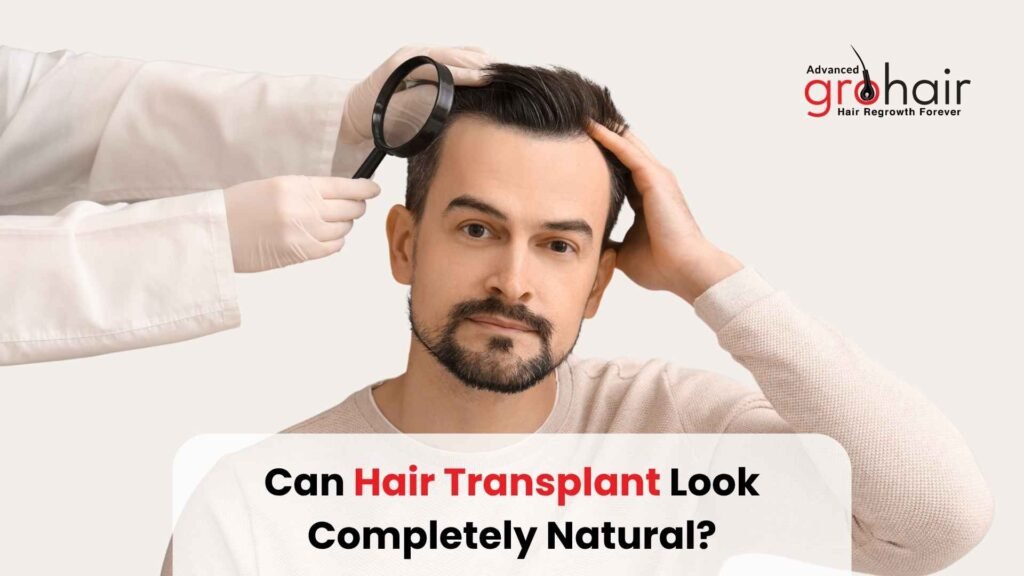
The most common fear people have before undergoing a hair transplant is quite simple: Will it look fake? Much of the older practices of the 1970s to the 1990s produced unnatural plug-like effects, which caused many patients to be suspicious of modern therapy.
Modern hair transplants can look completely natural. When done by a qualified surgeon with the latest techniques, such as FUE, the grafts are laid at the right angle, direction, and density to resemble the natural growth of hair.
In this article, we will guide you through modern procedures that can achieve natural-looking results, what influences the final appearance, and how to ensure that the hair transplant results are authentic and undetectable.
What Makes a Hair Transplant Look Natural?
Hairline Design: The Most Visible Factor
A realistic hairline is the base of all natural-looking hair transplants. Poorly designed hairlines were the primary reason why old hair transplants looked unnatural.
Always remember, a natural hairline is never straight; rather, it has minor anomalies that imitate the unpredictability of natural hair.
An effective natural hairline will match the proportions of the face and will make a balanced natural appearance. This aesthetic planning is among the largest disparities between the old plug techniques and the modern hair transplant surgery.
Graft Placement, Angle, and Direction
Placement will fail even the best quality of grafts. When performing a hair transplant procedure, all follicles should be oriented in the same direction as the original hair of the patient, as well as in the same direction as natural hair growth.
Variations in the angle occur in various parts of the scalp:
- The frontal region protrudes forward.
- The crown is done in a swirl, which is round.
- The temples develop in a diagonal manner.
Recent methods, such as follicular unit extraction (FUE), enable experts to take special care to extract individual units without any damage to the surrounding tissue.
This skill to isolate follicles accurately is one of the reasons that the current method of hair transplantation yields such exquisite results.
Density Progression: Building Depth, Not Just Coverage
There is no natural density that is spread across the head. It is a natural feature that the front hairline is naturally softer and lighter, with different thickening of the packing in the different areas.
When patients insist on extremely dense frontal placement, they may end up experiencing unnatural outcomes.
A natural-appearing hair transplant produces progressive density:
- Softer at the front
- Thickened behind the head line.
- Balanced to the crown.
This is a strategic move that enables the hair transplant outcomes to appear natural at all angles.
Overpacking may destroy follicles and lower the survival chances. Hair grafts are carefully spaced to protect the blood supply and grow better in the long term.
Surgeon Skill and Artistic Judgment
The use of technology in itself does not assure a successful hair transplant. The competency of the surgeon is the most critical element.
A skilled surgeon is highly trained and integrates medical knowledge and artistic imagination.
Great hair transplant surgeons realise:
- Facial symmetry
- Aging patterns
- Hair texture
- Long-term planning
When a person decides to choose a clinic based only on a low price, it is highly likely that the results are going to be disappointing.
Clinics with large volumes of procedures that are not controlled by experienced personnel have a higher chance of producing results that may appear beautiful in the short term but will fail aesthetically in the long term.
Types of Hair Transplants and How They Affect Natural Results
1. FUE (Follicular Unit Extraction)
The FUE hair transplant surgeries are the gold standard of modern restoration. In follicular unit extraction, experts extract single follicles directly from the donor region with the help of micro-punch tools.
Advantages include:
- Minimal scarring
- Faster healing
- Precise implantation
- Better short-hair flexibility
FUE is frequently preferred by patients who desire more of a natural look to their hair transplant, as the tiny extraction sites heal inconspicuously. Recent advances in FUE hair surgery also contribute to a more natural donor look.
2. FUT (Follicular Unit Transplantation)
FUT or follicular unit transplantation involves cutting a strip of tissue in the donor area. This strip is then cut into single grafts.
- Higher graft yield
- Efficient for larger sessions
- High follicle survival rate.
Nonetheless, FUT leaves a linear scar, hence not very suitable for patients with extremely short hairstyles.
Both FUE and FUT have the potential to yield a natural appearance when done appropriately.
3. DHI and Advanced Implantation Techniques
State-of-the-art implantation systems enhance accuracy in the placement. The techniques are used to develop improved angle control and smooth frontal work.
Recently, methods of combining techniques such as FUE with increased implantation devices are becoming increasingly popular to achieve more natural-looking results and minimise trauma to the scalp.
Factors That Affect How Natural Your Results Will Look
1. Donor Hair Quality and Availability
Natural-looking results depend heavily on the donor hair. Thick, dense, and healthy follicles provide better coverage than thin or weak strands. Hair texture also matters — curly or wavy hair creates more visual fullness than straight hair.
2. Facial Structure and Hairline Design
A hair transplant should match the patient’s facial proportions and age. Overly low hairlines often look unnatural over time. Skilled surgeons design conservative, age-appropriate hairlines for balanced and long-lasting results.
3. Degree of Hair Loss
Advanced hair loss can limit overall coverage. Patients with severe thinning may require multiple sessions to achieve realistic density and even results.
4. Future Hair Loss Progression
Planning for future hair loss is essential. Transplanted hair is permanent, but surrounding natural hair may continue to thin without proper treatment, affecting the overall appearance over time.
Before vs After: What Natural Hair Transplant Results Actually Look Like
Recovery takes time. It is normal to have redness and scabbing immediately after surgery.
Typical timeline:
Week 1: Healing phase
Weeks 2–4: Shock shedding
Months 3-4: Hair starts growing.
Months 6–9: Increased fullness
Months 12–18: Final maturation
In the initial phases, patients can be anxious since the new strands look to be sparse. This is absolutely normal. The thickness and strength of hair increase over time.
After some time, the transplanted hair acts just like ordinary hair. It is cut, styled, and washed naturally.
The ultimate result is based on healing, planning and realistic expectations.
Common Reasons Hair Transplants Look Unnatural, And How to Avoid Them
The primary causes of certain procedures not being aesthetically pleasing are:
- Direct artificial hairline transplantation.
- Incorrect graft angles
- Excessive frontal packing
- Poor donor management
- Inexperienced technicians
Earlier procedures tended to leave obvious plugs, but contemporary procedures rarely raise such issues when carried out correctly.
Hair transplants do not look natural only when the clinics do not follow the correct rules of how the hair should be designed.
How to Ensure Natural-Looking Results
To increase your chances of success:
- Select the appropriate clinic.
- Find out the most successful hair transplant clinic.
- Review before-and-after galleries
- Inquire about long-term planning.
- Talk about the risks of thinning in the future.
A reputable hair transplant centre will develop an individualised approach instead of a one-size-fits-all approach.
Conclusion
The industry has changed radically with modern hair transplant procedures. By using the latest methods, skilled artistry, and adequate planning, a hair transplant’s natural appearance is quite feasible.
The modern procedures are capable of producing the results that appear fully natural, blend with the rest of the strands, and make one feel convinced, yet without any traces of surgery. Gone are the days of unnatural plugs.
Frequently Asked Questions (FAQs)
Do hair transplants look natural under bright light?
Yes, a properly performed hair transplant should look natural even under bright lighting. Skilled surgeons use strategic graft placement and natural density patterns to avoid an artificial appearance.
How long does it take for a hair transplant to look fully natural?
Most patients start seeing noticeable growth within 3 to 4 months, while the final natural-looking results typically develop between 12 and 18 months after the procedure.
Can a hair transplant look natural with a short hairstyle?
Yes, modern techniques like FUE create minimal scarring, allowing many patients to wear short hairstyles while maintaining a natural appearance.
What is the biggest factor behind natural-looking hair transplant results?
The surgeon’s experience and artistic approach play the biggest role. Hairline design, graft angle, and density planning are essential for achieving realistic results.
Can hair transplants look natural for people with severe hair loss?
Yes, natural-looking results are possible even with advanced hair loss, although some patients may require multiple sessions and careful long-term planning for balanced coverage.
Book An Appointment