Laser Hair Removal: What Should You Know Before Your First Session?
Consultant Dermatologist
What Is Laser Hair Removal?
Laser hair removal is a procedure designed to reduce unwanted hair using controlled light energy.
During treatment, a laser device directs light towards the hair. Pigment present in the hair absorbs that light and converts it into heat. The heat then affects the structures involved in producing new hair. Unlike shaving, which trims hair at the skin surface, laser treatment works below the visible surface. Unlike waxing, it does not rely on pulling the hair out manually.
The purpose of the treatment is not to make a promise that every hair will disappear forever. In practical terms, it is more useful to think of it as a method of long-term hair reduction. Some people notice that hair takes longer to return. Others may find that the regrowth becomes finer, patchier or easier to manage.
For this reason, the term laser hair reduction is often a more accurate description than permanent hair removal.
How Does Laser Hair Removal Work?
The basic principle behind laser treatment is selective heating.
Hair naturally contains melanin, the pigment that gives it colour. When laser energy reaches the hair, the pigment absorbs part of that energy. The goal is to deliver enough heat to influence the hair follicle while limiting unnecessary heating of the nearby skin.
That sounds simple, but treatment planning involves several factors.
The provider may consider:
- the colour of the hair
- the thickness or thinness of the hair
- the person’s skin tone
- the area being treated
- previous laser experience
- sensitivity of the skin
This is why there is no single setting that works equally well for everyone.
The type of laser and treatment parameters may need to be adjusted according to the individual. A professional assessment is particularly important when treating different skin tones, because the device should distinguish as effectively as possible between pigment in the hair and pigment in the skin.
Modern laser technology has made treatment possible for a wider range of people, including many individuals with Indian skin tones. However, suitability still needs to be assessed rather than assumed.
Which Areas Can Be Treated?
Laser hair removal can be used on a number of facial and body areas.
Face
Certain parts of the face may be treated, including the upper lip, chin, jawline and side areas of the face. People looking for laser hair removal for face should first have the pattern of facial hair assessed, especially if the growth is sudden, excessive or possibly linked to hormonal changes.
Underarms
Underarm hair is one of the more commonly treated areas. Some people consider laser because they are tired of frequent shaving or because shaving tends to cause bumps or irritation.
Arms
Laser treatment may be performed on the forearms, upper arms or the full arm depending on the person’s requirement.
Legs
Both partial-leg and full-leg treatments may be considered. Since the treatment area is larger, sessions can take longer than treatments performed on smaller areas.
Other Body Areas
The back, chest, abdomen, bikini region and other suitable areas can also be treated after assessment.
Some clinics offer full body laser hair removal, but “full body” can mean different things at different clinics. It is worth checking exactly which areas are included before starting treatment.
Why Are Multiple Laser Hair Removal Sessions Needed?
One common misunderstanding is that a single session should remove all unwanted hair.
Hair does not grow in a perfectly uniform way. Each follicle moves through its own cycle, and not every hair is actively growing at the same time. Laser treatment tends to work most effectively when the hair is in a suitable active growth stage.
During one appointment, only a portion of the hairs in the treatment area may be in that phase. Other hairs may be resting or transitioning.
This is the main reason a series of sessions is usually recommended. As treatment continues, different groups of hairs enter the active stage and can then respond to the laser.
Over time, this can lead to:
- fewer visible hairs
- slower regrowth
- finer hair texture
- reduced hair density
The number of sessions varies. Someone treating coarse underarm hair may respond differently from someone undergoing treatment for finer facial hair.
Spacing between sessions can also vary depending on the area because facial and body hair do not always follow the same growth pattern.
How Should You Prepare Before Laser Hair Removal?
Preparing properly can influence both comfort and treatment effectiveness.
Avoid Waxing and Plucking
Before treatment, most clinics advise patients not to wax, tweeze or pluck the area. These methods remove the hair from the root. Since the laser relies on the presence of the hair structure within the follicle, pulling it out may reduce the effectiveness of that session.
Shave Only as Directed
Shaving is different because it cuts the hair at the surface while leaving the follicle in place. Your clinic may ask you to shave the area a certain number of hours or days before the appointment.
Follow their specific instructions rather than deciding the timing yourself.
Mention Your Medicines
Certain medications can make the skin more sensitive to light or affect healing.
Before starting a laser hair removal treatment, tell the provider about prescription medicines, topical creams, acne treatments or supplements you are using. Also mention any active skin condition in the area being treated.
Be Careful With Sun Exposure
A recent tan or strong sun exposure may make treatment planning more complicated. Your provider may ask you to minimise sun exposure before the session and use appropriate sun protection on exposed areas.
This is particularly important for facial, arm and leg treatment.
What Happens During a Laser Hair Removal Session?
Your first appointment usually begins with a review of the area being treated.
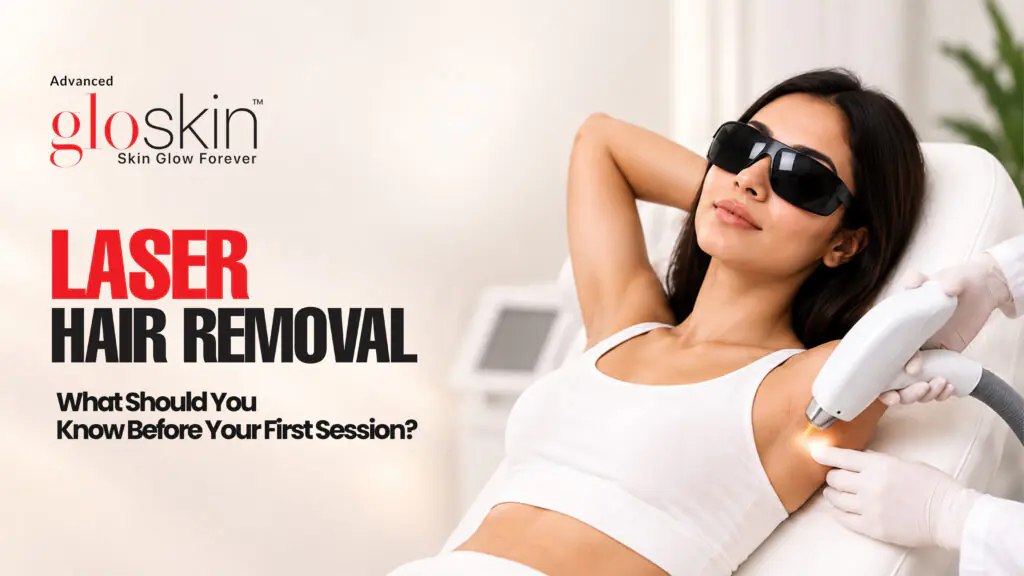
The provider may examine the hair thickness, skin tone and any signs of sensitivity. If required, the area may be cleaned or trimmed before treatment begins. Protective eyewear is usually worn during the procedure. The laser handpiece is then moved across the treatment area in a controlled pattern. Each pulse delivers a short burst of energy.
Depending on the technology being used, the device may also include cooling to reduce heat on the skin. The sensation is different for everyone.
Some people describe it as:
- a quick warm pinch
- a mild snapping feeling
- brief heat
- tingling
Treatment time depends largely on the area.
A small facial area may be completed relatively quickly, while legs, back or full body laser hair sessions naturally require more time.
Once the procedure is finished, the skin may be cooled and aftercare instructions are provided.
What Should You Do After the Treatment?
The treated area may feel slightly warm immediately after the session.
Some people also notice temporary redness around the follicles. This usually settles, although the skin’s response can vary.
After treatment, the clinic may advise you to:
- avoid very hot showers for a short time
- stay away from steam or sauna exposure
- avoid harsh scrubs
- use gentle products on the treated skin
- wear sunscreen on exposed areas
- avoid scratching or rubbing the area
You should also avoid waxing or plucking hair between sessions unless your provider advises otherwise. One important thing to know is that treated hair does not always fall out instantly. Some hairs may appear to continue growing for several days before gradually shedding.
This is a normal part of the laser hair removal process and does not necessarily mean the treatment has failed.
If you experience unexpected blistering, persistent discomfort or major changes in the skin, contact the clinic for medical guidance.
Can Laser Hair Removal Work on Every Hair Type?
Laser response depends greatly on pigment.
Dark hair generally absorbs laser energy more effectively because it contains more melanin. Very light blonde, white, grey or some red hairs contain less pigment, so the laser may have less to target.
Hair thickness also matters. Coarse hair may respond differently from very fine hair. This is one reason facial hair removal can sometimes require a more individualised treatment plan.
Skin colour is another consideration. Older laser systems were often easier to use when there was strong contrast between dark hair and lighter skin. Newer systems have expanded treatment options for darker skin tones, but device selection and operator experience remain important.
Instead of searching only for the “best laser hair removal” machine, it is better to ask whether the technology being used is appropriate for your skin and hair characteristics.
How Is Laser Hair Removal Different From Waxing and Shaving?
All three methods deal with unwanted hair, but they do so in different ways.
Method | What It Does | How Long It Lasts | Main Limitation |
Shaving | Cuts hair above the skin | Short term | Hair can return quickly |
Waxing | Removes hair from the root | Usually lasts longer than shaving | Needs repeated waxing |
Laser Hair Removal | Targets suitable hair follicles using light energy | Aims for progressive hair reduction | Requires multiple sessions |
Shaving is convenient and inexpensive, but frequent shaving can sometimes contribute to razor bumps or ingrown hair. Waxing removes hair from the root, but it remains a temporary solution. Laser works differently because the objective is to reduce how much hair grows back over time.
For people who repeatedly manage unwanted body hair, laser may reduce how often they need other hair removal methods.
However, it is not automatically the right option for everyone.
Conclusion
Laser hair removal offers a different way to manage unwanted hair compared with shaving, waxing and other temporary methods.
Rather than repeatedly removing visible hair, the treatment is designed to gradually reduce the activity of suitable follicles over a series of sessions. Results can differ from person to person. Hair colour, thickness, skin type, treatment area and individual growth patterns all play a role.
If you are considering laser hair reduction in Chennai or searching for a laser hair removal treatment, start with a consultation where your skin and hair can be properly assessed.
A well-planned treatment approach is more useful than focusing only on price, session count or claims of permanent results.
Frequently Asked Questions
How does laser hair removal work?
Laser energy is absorbed by pigment in the hair. The resulting heat affects the follicle responsible for producing hair, which can gradually reduce future regrowth.
Why are multiple sessions required?
Hair grows in different stages. Because not every follicle is active at the same time, several sessions are usually required to treat different hairs as they enter a suitable growth phase.
Can laser hair removal be done on the face?
Yes, selected facial areas can be treated. Suitability depends on factors such as hair thickness, skin type and the pattern of facial hair growth.
Can I wax before laser hair removal?
Usually, no. Waxing removes hair from the root, which may interfere with the laser’s ability to target the follicle. Clinics generally advise shaving instead, according to their instructions.
Is laser hair removal permanent?
Laser treatment is generally considered a method of long-term or permanent hair reduction, not a guarantee of complete permanent removal. Some people may need occasional maintenance sessions.
Book An Appointment
Also Read