Why Is Your Hairline Receding Even When You Are Not Losing Much Hair?
Consultant Dermatologist
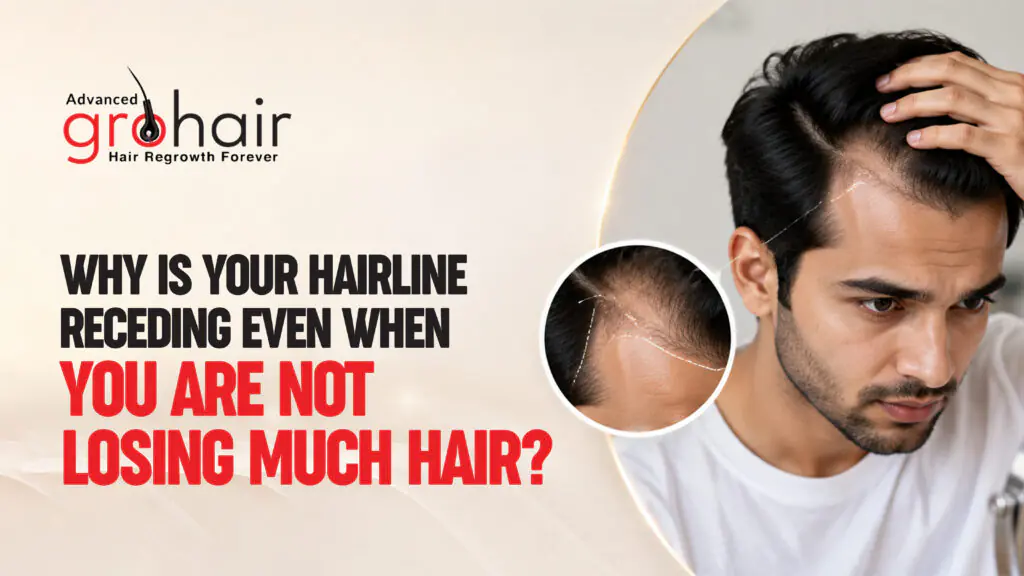
A lot of people will notice something different along their hairline before they notice significant hair loss , noticeable hair loss. Like, For example, the forehead may appear more prominent , the temples may look thinner, or the hair at the front may not seem as dense as it used to be . This can be confusing too, because You may not notice increased shedding, excessive hair fall while showering, or more hair loss while combing .
A receding hairline usually shows up gradually, because changes are going on inside the hair follicles. Little by little, some follicles may shrink, and then they start making strands that are thinner, this process is called as follicle miniaturisation. When you understand why the hairline is changing, it often makes it easier to pick the right way to deal with it, or at least know what direction to take.
What Is a Receding Hairline?
A receding hairline means that the frontal hairline gradually moves backwards.. Usually it appears in the areas near the temples and also in the front part of the scalp.
Some common signs include:
- Hairline moving further back from its previous position
- Thinning around the temples
- A more visible forehead appearance
- Reduced density of hair at the front
- Finer and weaker strands near the frontal hairline
A hairline does not always change suddenly. In a lot of instances, the process is sort of gradual and people might only catch subtle changes when comparing older photographs with recent ones.
Why Does the Hairline Start Receding?
A receding hairline can develop gradually due to several factors. The most common reasons include genetics, hormonal changes, ageing, and individual hair-growth patterns.
Genetic Hair Loss
Genetics can influence how sensitive your hair follicles are to hormones like DHT.
- Inherited sensitivity to DHT can affect hair follicles
- Follicles may gradually become smaller over time
- Individual hair strands may become finer, while overall hair density may decrease
- This is commonly associated with male pattern hair loss
Hormonal Influences
Hormones play an important role in regulating the hair-growth cycle.
- Changes in hormone levels may affect hair follicle activity
- DHT sensitivity can contribute to gradual hairline recession
- The impact varies depending on individual follicle sensitivity
Age-Related Changes
Natural ageing can affect hair thickness and density.
- Hair follicles may produce thinner strands with time
- Overall hair density may gradually reduce
- Age-related changes do not always lead to complete baldness
Natural Hairline Variation
Everyone has a unique hairline shape and growth pattern.
- Some people naturally have a higher hairline
- Mild recession can occur as part of normal ageing
- Sudden or noticeable changes may require professional evaluation
- Identifying the cause early can help with appropriate management.
Can a Receding Hairline Happen Without Excessive Hair Shedding?
Yes, a receding hairline can show up even if you are not experiencing noticeable hair shedding.
Hair shedding and hair thinning are not always the same thing. For a lot of people, hair follicles slowly become weaker and start to make finer strands instead of dropping out right away, or, rather than shedding immediately . This process is known as miniaturisation.
The hair might still be there, but it gets thinner, shorter, and less visible. Over time, this can make the front area look less dense.
Early Signs of Hairline Recession
Recognising early changes can make hair thinning easier to manage. , can make managing hair thinning a bit easier, even if at first it seems subtle.
Common warning signs include:
Wider temples
The temples and corners of the hairline may slowly slide backward, and it ends up looking like the temple area is broader.
Thinner front strands
Hair close to the forehead may look finer, or even more delicate, compared with the hair toward the back or on the sides.
More visible forehead
You might notice the forehead area looking taller than usual, that can be a sign the hairline is shifting.
Finer growth right along the hairline
Fine, miniaturised hairs along the frontal hairline can seem weaker, less dense, and generally thinner over time.
Taking periodic photographs can make gradual changes easier to identify gradual differences easier to spot, especially when they feel almost invisible day to day.
Is a Receding Hairline Always Male Pattern Hair Loss?
No. A receding hairline does not always indicate male pattern hair loss
Genetics is one of the most common causes, but other factors may also contribute. , but a few other things may also affect the hairline too, like
1. Genetic sensitivity to DHT
2. Male pattern hair loss
3. Age-related follicle changes
4. Hormonal changes
5. Individual hair-growth pattern
And sometimes different types of hair loss can seem sort of identical at the start, so it’s easy to misread the signs.
A dermatologist or hair specialist can look at the scalp, hair follicles, and thinning patterns to get to the real cause, to determine the underlying cause more accurately.
Can a Receding Hairline Be Prevented From Progressing?
The chances of slowing hairline recession really depends on what’s causing it, and how early it is addressed. If the underlying cause is identified and addressed early management may help, otherwise the condition may continue to progress .
Some general steps that may support healthier hair include:
- Maintaining a balanced diet with adequate nutrients
- Managing stress levels
- Avoiding excessive heat and chemical treatments
- Following a suitable scalp-care routine
- Seeking professional advice when changes are noticeable
If the recession is related to inherited hair thinning, then early, management might help you preserve existing hair density for longer .
Professional Treatment Options for Hairline Hair Loss
The right treatment depends on the condition of the hair follicles and the reason behind the recession. A hair specialist may recommend different approaches after assessment.
PRP Treatment
Platelet-rich plasma, sometimes called PRP, uses concentrated components from the patient’s own blood, including platelets and associated growth factors, which may support the scalp environment and hair growth in selected patients . It may be discussed for people who still have suitable follicles and are dealing with early-stage hair thinning, not the more advanced hair loss.
GFC Treatment
Growth Factor Concentrate, GFC therapy, uses a concentrated preparation containing growth factors that may encourage hair follicle activity. This can be chosen depending on the results of an individual evaluation, so its suitability should be determined following an individual assessment .
Medical Hair-Loss Management
Depending on the underlying cause and diagnosis , doctors may recommend medical hair-loss management options. That can include topical or oral medications. For instance, minoxidil is sometimes suggested in certain cases after appropriate medical evaluation .
Hair Transplant
When follicles in the thinning area can no longer make healthy hair, a hair transplant might be an option to consider. The idea is to move healthy hair follicles into areas where hair density has decreased , to restore hair density and create a natural-looking hairline .
Also, a hair transplant isn’t suitable for everyone. Donor hair quality matters a lot, and the pattern of hair loss should be reviewed carefully before a treatment is planned.
When Should You Consult a Hair Specialist?
You should consider consulting a hair specialist if you notice:
– Progressive temple thinning
– A noticeably changing hairline
– Reduced frontal hair density
– More scalp visibility than usual
– A family history of pattern baldness
– Hair thinning that keeps going over time
Getting an early assessment can help clarify the underlying cause, and then you can discuss appropriate treatment options before further hair loss occurs.
Conclusion
A receding hairline doesn’t always mean that you’ll get sudden or really severe hair loss. Often it comes slowly, like over time, because hair follicles change, and there’s genetics, hormone shifts, or simple ageing. Noticing early clues, like the temples getting thinner, or that front area losing density faster than before, can give you a clearer view of what’s going on. If those changes keep going then getting a professional hair assessment might pinpoint the root issue, and help you choose appropriate ways to manage it.
Frequently Asked Questions
Why is my hairline receding but I am not losing much hair?
Hair follicles can gradually become thinner and produce finer strands without noticeable hair shedding. This process can slowly change the appearance of the hairline.
Is a receding hairline always genetic?
Genetics are a common reason, but factors such as hormones, scalp health, lifestyle, and other types of hair loss can also affect the hairline.
Can a receding hairline grow back naturally?
Regrowth depends on the cause and the condition of the affected hair follicles. Early-stage thinning may respond better to appropriate management.
Can PRP or GFC help a receding hairline?
PRP and GFC may be considered for suitable individuals after evaluating the scalp condition, follicle health, and cause of hair loss.
How do I fix my receding hairline?
The approach depends on the severity and cause. Options may include lifestyle changes, medical management, regenerative treatments, or hair transplant procedures when appropriate.
How can I thicken my hairline naturally?
A healthy diet, proper scalp care, stress management, and avoiding damaging hair practices can support overall hair health. However, genetic hair loss may require professional treatment.
When should I get my receding hairline checked?
If you notice continuous temple recession, thinning at the front, or changes in your hairline, an early consultation can help identify the cause and available treatment options.
Book An Appointment