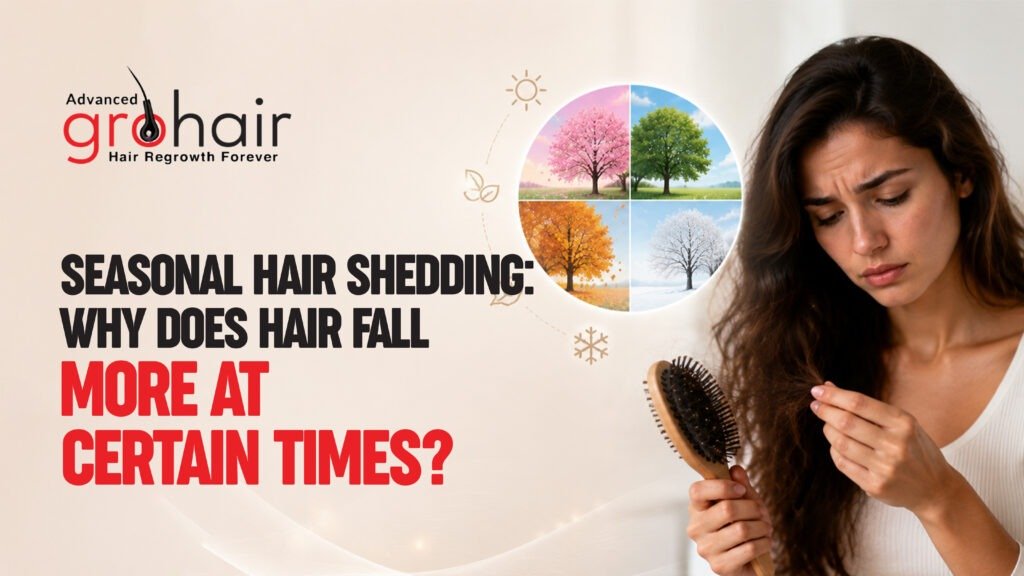
Seasonal Hair Shedding: Why Does Hair Fall More at Certain Times?
Consultant Dermatologist
What Is Seasonal Hair Shedding?
Have you noticed more hair strands on your pillow, comb, or bathroom floor during certain months of the year? You are not alone. Many people see changes in how much hair they shed when the seasons shift, and it can feel unexpected even if everything else looks fine.
Seasonal hair shedding means a temporary increase in shedding that may occur when more hair follicles enter the resting phase of the hair growth cycle. Because hair’s always experiences growth, resting, shedding cycle, losing some strands each day is normal, at least for most folks.
On average, shedding approximately 50 to 100 hairs per day may be part of the natural process. Still, during particular times of the year, some people may notice a temporary increase compared with their usual level of shedding.
It is important to distinguish seasonal shedding apart from ongoing hair loss.
Why Can Hair Shedding Change With the Seasons?
Seasonal changes may affect the scalp environment and hair condition. These effects can vary from person to person, so in some cases, people notice increased shedding during certain periods of the year
1. Changes in Temperature
Temperature changes can affect your scalp environment. In the warmer season, sweating along with higher oil output might play a role in scalp buildup. Then in the colder months, the dry air can sometimes contribute to scalp dryness, and it may affect scalp & hair condition.
All of that can affect hair texture and appearance. Because of that, normal shedding may become more noticeable .
2. Humidity Levels
Humidity can affect hair texture and scalp condition . If the humidity gets high it contribute to frizz and increased oiliness and even some scalp discomfort. On the flip side low humidity often makes hair feel dry and more dry and prone to breakage.
So when the scalp environment shifts, maintaining an appropriate hair-care routine can help protect hair health to help the hair stay healthy.
3. Sun Exposure
Long stretches of sun exposure can damage the hair shaft and affect its outer structure . Too much sunlight, particularly without any protection, may lead the hair to look dry and somewhat weak, not just in one way either.
Even so, sunlight is not considered a direct cause of seasonal hair shedding . Still, when the hair texture shifts and breakage shows up, it can make hair breakage more noticeable and may be mistaken for increased hair shedding . Sun exposure can affect the hair shaft, but damaged hair breaking off is not the same as a follicle shedding a hair.
4. Changes in Hair-Care Routine
People often end up changing their hair care habits as the seasonal shifts . You might swap shampoos , change how often you wash , alter styling habits, or even rely a bit more on heat-based treatments and that can affect hair condition and appearance
Honestly, small adjustments to your routine can really help keep your scalp in better shape during these seasonal transitions , even when everything feels a little different.
Is Seasonal Hair Shedding Normal?
Yes, Mild seasonal shedding really can be normal for some individuals. Usually it feels like a temporary phase, where more hair follicles end up in the shedding phase first, then later re-enter the growth phase.
Still, not every little jump in hair fall should automatically be labeled as seasonal.
You should seek professional advice if you notice :
- Continuous hair shedding for several months
- Visible thinning areas on the scalp
- A widening hair parting
- Receding hairline
- Sudden patches of missing hair
- Reduced hair density
These signs could be pointing to an underlying condition, not just normal seasonal shedding.
Stuff like nutritional gaps, shifts in hormones, stress, issues on the scalp, genetics, and a few particular medical conditions can also contribute to increased hair shedding.
Seasonal Hair Shedding vs Hair Loss
Even though the terms are often used together seasonal shedding and hair loss are distinct conditions .
1. Temporary Hair Shedding
Seasonal shedding is usually short term. The hair growth cycle just continues through its normal growth cycle , and the follicles may produce new hairs as they re-enter the growth phase
2. Progressive Hair Loss
Hair loss is usually tied to changes in the hair growth cycle or follicle function . It can include a few things, possible causes include:
- Gradual thinning of hair
- Reduced hair density
- Receding hairline
- Increased visibility of the scalp
Conditions like pattern hair loss or other scalp-related issues may require a professional evaluation, just to identify the underlying cause.
Figuring out what counts as normal shedding vs persistent hair loss can help you do the right things at the right time, sooner rather than later.
How Can You Manage Increased Hair Shedding?
Even though seasonal shifts can happen and can’t always be avoided, Following appropriate hair-care practices can help maintain hair and scalp health .
Maintain Balanced Nutrition
Adequate nutrition supports normal hair growth and overall hair health. , like, not just one thing. When your diet is balanced and includes sufficient protein, essential vitamins, minerals, protein, and healthy fats then supports normal hair growth .
If there are nutritional deficiencies , you may notice the hair may become more fragile or prone to breakage , and the overall quality can look diminished, so keeping a nutrient rich diet is an important part of everyday hair care.
Follow Gentle Hair Care Practices
Try not to avoid excessive or vigorous brushing , don’t be too rough with a vigorous towel drying, and also be careful with tight hairstyles they can place unnecessary tension on the hair and scalp
Pick hair products that suit your scalp & hair type , and avoid frequently changing products without a specific reason every few days if you havent really understood your hair and scalp needs.
Keep Your Scalp Clean
A healthy scalp makes it easier for the hair follicles to live in a good, a healthy scalp environment. With regular cleansing you can lift away excess oil , sweat and product buildup.
Still, if you wash too often , or choose harsher products, it can cause dryness or irritation.
Manage Stress Levels
Significant or prolonged stress can affect the hair growth cycle and may contribute to increased shedding in some people.
You can try stress management strategies like regular exercise, getting enough sleep, using relaxation techniques, and maintaining regular sleep, physical activity, and relaxation practices may support overall well-being .
Reduce Heat and Chemical Damage
Frequent use of heat styling devices a lot , and also chemical treatments, may increase hair dryness and breakage over time and can lead to more breakage.
If you use heat protectant products and cut down on unnecessary treatments, your hair can stay stronger, more resilient..
When Should You Consult a Hair Specialist?
Occasional seasonal shedding is usually not a reason for concern. However, professional advice may be helpful if:
- Hair shedding persists for several months
- Sudden or excessive hair fall
- Noticeable thinning or reduced density
Bald patches
Scalp redness, scaling, itching, or other changes
Hair loss that is affecting your confidence or daily activities
A dermatologist or a qualified hair specialist can evaluate your scalp, hair growth pattern, lifestyle factors, and possible causes of shedding before suggesting appropriate treatment options.
Early assessment can help identify whether the issue is temporary shedding or a condition requiring targeted management.
Can Professional Hair Treatments Help With Persistent Hair Loss?
If increased shedding is linked to ongoing hair loss, individual treatments may be considered following an appropriate evaluation.
Treatments such as PRP (Platelet-Rich Plasma) therapy and GFC (Growth Factor Concentrate) treatment may be considered in selected patients as an adjunctive treatment for certain types of hair loss, although outcomes can vary .
The right approach depends on factors such as the cause of hair loss, scalp condition, hair follicle health, and individual requirements.
Professional guidance is important because treatment suitability and response can vary between individuals . A an individualised treatment plan can be developed based on the underlying cause and clinical findings. behind hair thinning or excessive shedding.
Conclusion
Seasonal hair shedding is a common experience for many people and may happen as part of the natural hair growth cycle. Changes in temperature, humidity, lifestyle habits, and hair-care routines can influence how much hair you notice shedding.
However, ongoing hair fall should not always be blamed on seasonal changes. Understanding the difference between temporary shedding and true hair loss can help you take timely action and maintain better hair health.
Frequently Asked Questions
Is seasonal hair shedding real?
Yes, some people may notice increased hair shedding during certain times of the year. However, persistent or excessive shedding should be evaluated to rule out other causes.
How long does seasonal hair shedding last?
The duration can vary from person to person. If increased shedding continues or becomes worse, consulting a specialist can help identify the reason.
How is seasonal shedding different from hair loss?
Seasonal shedding is usually temporary, while progressive hair loss can cause noticeable thinning, reduced density, or changes in the hairline.
Can nutrition help with seasonal hair shedding?
A balanced diet supports healthy hair growth. However, nutrition alone may not solve hair shedding caused by other factors.
When should increased hair shedding be checked?
You should consider professional advice if hair shedding persists, becomes excessive, or is accompanied by visible thinning or scalp changes.
Book An Appointment