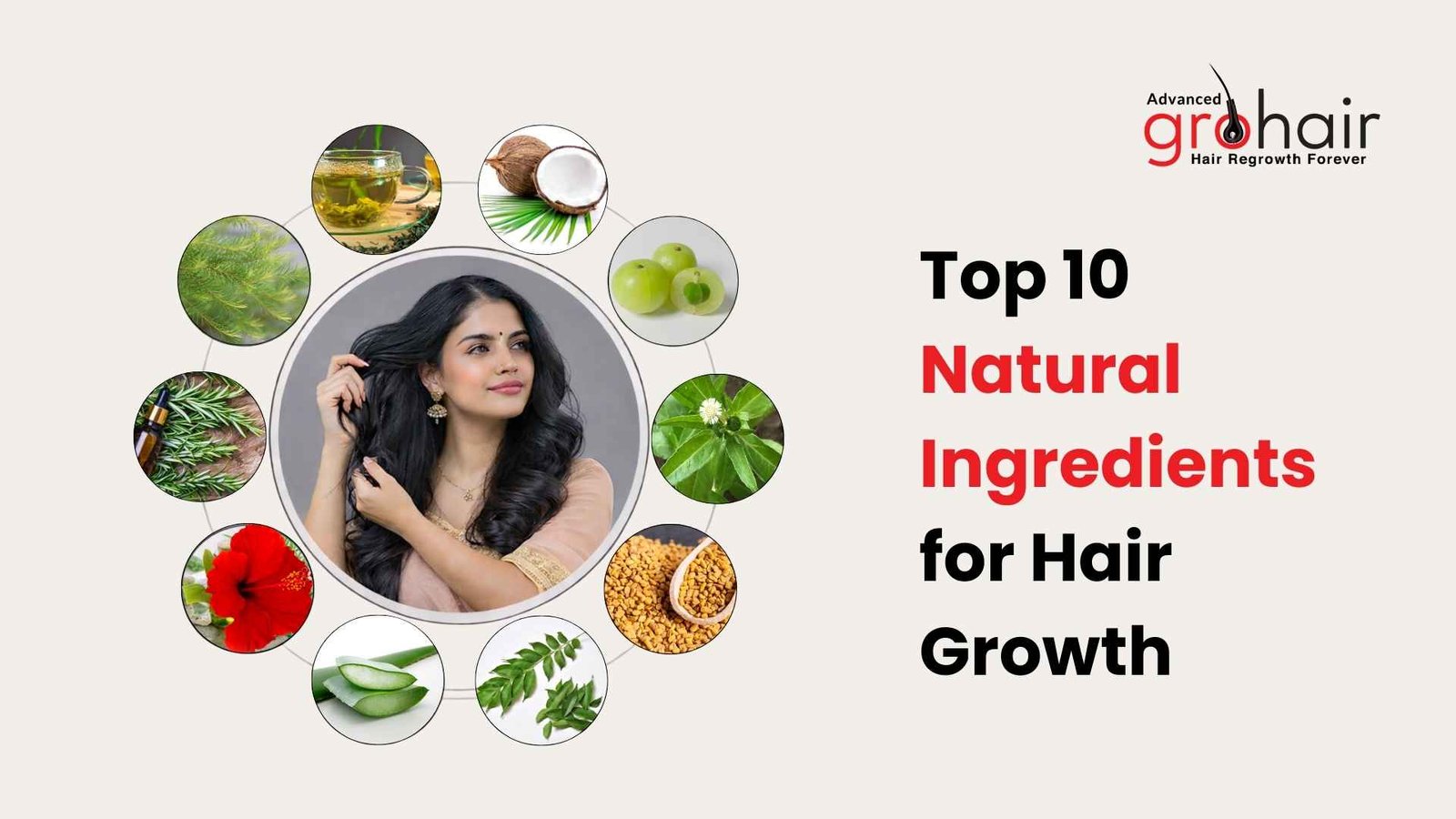
Top 10 Natural Ingredients for Hair Growth
Hair growth isn’t random luck. It’s biology: your scalp environment, your hair follicles, and your day-to-day habits decide whether hair stays strong—or shifts into hair fall. Natural ingredients can support hair health, reduce breakage, and help maintain a healthy scalp. But they are not magic bullets for every type of hair loss (especially genetic pattern hair loss).
In this guide, you’ll find the best ingredients for hair growth, how to use them safely, and the common mistakes that stop results. If your shedding continues for 6–8 weeks, or you’re seeing visible thinning, treat it as a scalp + follicle problem that needs proper evaluation—not just another remedy.
Hair Growth Basics: What Actually Drives Results
- Hair growth happens in cycles. Hair spends time growing (anagen), transitioning, and shedding (telogen). That’s why most interventions need 8–12 weeks before you notice meaningful change.
- Hair growth can mean different things:
- Less breakage → hair looks longer/thicker because the hair shaft isn’t snapping.
- Better thickness → improved “hair growth and thickness” appearance from healthier strands and scalp.
- New growth → actual “baby hairs” coming from follicles (this is slower and depends on the cause).
- Your scalp matters because it’s the “soil.” Inflammation, dandruff, and product buildup reduce comfort and can worsen shedding.
Better blood flow to the scalp helps support follicles, but it’s only one piece of the puzzle.
If you’ve noticed reduced density or visible thinning (especially at temples/crown), it’s a sign the follicles may be miniaturizing, and you should treat it early.
How to Use Natural Ingredients Without Irritating Your Scalp
Natural doesn’t automatically mean harmless. Many people worsen dandruff and irritation by over-oiling or layering ingredients.
Here’s the doctor-friendly safety checklist:
- Patch test first (24 hours): Apply a small amount behind the ear or inner arm.
- Essential oils must be diluted. Never apply rosemary, tea tree, or peppermint oil directly to the scalp.
- Choose a mild shampoo if you oil regularly. Over-oiling + under-washing leads to buildup and dandruff flare.
- If your scalp is already itchy or inflamed, avoid strong DIY mixes and focus on calming and cleansing.
- Different hair types react differently: oily scalps need lighter routines; dry scalps need gentler cleansing and less frequent washing.
A simple rule: support the scalp first, then chase hair growth.
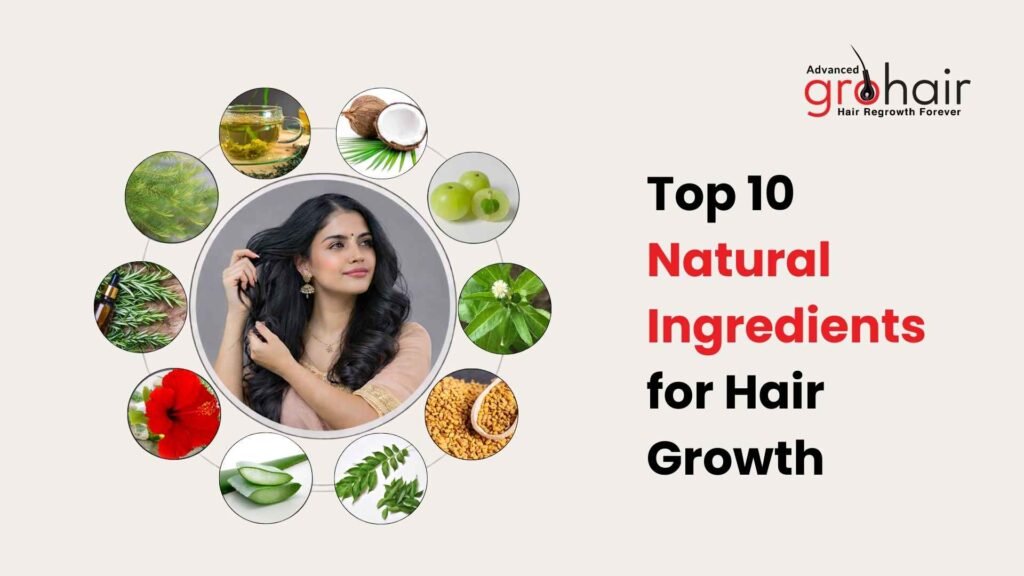
Top 10 Natural Ingredients for Hair Growth
1) Coconut Oil
Best for: dryness, breakage, hair damage
Why it may help: Coconut oil is rich in fatty acids and can help seal the hair shaft, which reduces protein loss and improves softness. This supports natural shine and reduces breakage that can look like hair loss.
How to use: Warm a small amount in your palm and apply mostly to lengths. Use a thin layer if it does not cause any irritation.
How often: 1–2 times/week.
Caution: If you’re prone to dandruff or greasy scalp buildup, keep oil off the scalp and shampoo properly.
2) Amla
Best for: dullness, weak strands, overall hair care support
Why it may help: Amla has antioxidant support and is commonly used to strengthen hair and improve scalp comfort when used correctly.
How to use: Use amla oil, or mix amla powder with water or curd to make a gentle hair mask.
How often: 1 time/week.
Caution: If you have sensitive scalp, start with shorter contact time to prevent dryness or irritation.
3) Bhringraj
Best for: scalp nourishment, hair root support
Why it may help: Traditionally used to nourish the scalp and support hair strength. Think of it as supportive hair care—not a guaranteed regrowth solution.
How to use: Bhringraj oil applied to scalp with gentle massage.
How often: 1–2 times/week.
Caution: Avoid heavy overnight oiling if dandruff is active.
4) Fenugreek Seeds
Best for: dryness, breakage, scalp comfort, hair fall support
Why it may help: Fenugreek mucilage can coat strands and improve slip, reducing breakage. For some people, it can help reduce hair fall caused by dryness and scalp irritation.
How to use: Soak seeds overnight, blend into a paste (or use strained gel), apply to scalp + lengths.
How often: 1 time/week.
Caution: Patch test—some people experience itching. Rinse thoroughly to avoid buildup. Also If you are prone to cold or sinusitis try to avoid this.
5) Curry Leaves
Best for: weak strands, dullness, scalp nourishment
Why it may help: Curry leaves are used in natural hair care for strengthening and scalp nourishment. They don’t “force” new follicles, but they can support hair health over time.
How to use: Curry leaves infused in coconut oil (strain and store), apply lightly.
How often: 1–2 times/week.
Caution: Don’t leave thick oil layers on the scalp if you have dandruff.
6) Aloe Vera (Fresh Gel)
Best for: itchy scalp, irritation, scalp dryness
Why it may help: Aloe can calm the scalp due to gentle antiinflammatory properties and helps improve scalp health. It may also help strengthens the skin barrier when used appropriately (especially in irritated scalps).
How to use: Apply fresh aloe vera gel to scalp for 20–30 minutes, then rinse and shampoo as needed.
How often: 1–2 times/week.
Caution: Some people react to latex in aloe—patch test is a must.
7) Hibiscus
Best for: frizz, rough texture, strand strength
Why it may help: Hibiscus can help improve smoothness and reduce breakage in the hair strands, making hair appear thicker and healthier.
How to use: Hibiscus flowers paste/mask or hibiscus rinse.
How often: 1 time/week.
Caution: Rinse well. Thick masks can cause residue and scalp buildup if not washed properly.
8) Rosemary Oil (Diluted)
Best for: early thinning support, scalp stimulation
Why it may help: Rosemary oil is often used to support scalp comfort and stimulate the scalp environment. It may support circulation and help stimulate growth in early stages when follicles are still active.
How to use: Mix 2–3 drops rosemary oil in 1–2 teaspoons of carrier oil (coconut/jojoba). Apply to scalp.
How often: 2–3 times/week.
Caution: Never apply undiluted. Stop if burning/itching increases.
9) Tea Tree Oil (For Dandruff-Prone Scalp)
Best for: dandruff, oily scalp, buildup
Why it may help: Tea tree oil can support dandruff control and reduce the greasy-itchy cycle that worsens scalp inflammation. Better dandruff control can reduce one trigger of shedding.
How to use: Add 1–2 drops to a carrier oil OR use a tea tree-based shampoo.
How often: 1–2 times/week.
Caution: Must be diluted. Too strong can irritate and worsen flaking.
10) Green Tea Rinse (Antioxidant Support)
Best for: scalp refresh, oil control support
Why it may help: Green tea offers antioxidant support and can be a mild scalp rinse option for some people.
How to use: Brew green tea, cool completely, apply to scalp after shampoo, leave 5–10 minutes, rinse.
How often: 1 time/week.
Caution: Not for everyone—if it causes dryness, stop.
Expert tip: If dandruff or itching is active, treating scalp inflammation matters more than adding more oils. A calm scalp gives follicles the best chance.
Simple Weekly Hair Care Routine for Healthy Hair Growth
You don’t need 10 ingredients every week. Consistency beats complexity.
Weekly routine:
- 2 days/week: light oiling + 5–7 minutes gentle massage
- 2–3 days/week: wash with a mild shampoo
- 1 day/week: calming mask
- If dandruff: reduce oiling, focus on scalp cleansing and avoid heavy layering
This supports hair care goals without triggering buildup.
Common Mistakes That Worsen Hair Fall
- Using a new remedy every week
- Oiling heavily and skipping shampoo → buildup → dandruff flare
- Scrubbing aggressively
- Expecting natural oils to regrow hair in bald areas
- Ignoring internal triggers
Natural hair care works best as support—not as a substitute for diagnosis.
When Natural Ingredients Are Not Enough
Natural routines are great for mild concerns. But if your hair loss issues are progressing, don’t delay.
Consider professional evaluation if you notice:
- Widening part line
- Crown thinning or temple recession
- Sudden heavy shedding for more than 6–8 weeks
- Family history of pattern hair loss
- Patchy hair loss (possible alopecia)
Early treatment protects hair follicles, and timing matters more than people think.
What Hair Clinics do for Hair Regrowth
A clinic approach usually combines scalp diagnosis + targeted support.
- Scalp analysis to assess follicle health and thinning patterns
- Correct cleansing + routine
- Evidence-based topicals
- Nutrition support : iron, vitamin D, and biotin only if needed
- In selected cases, advanced treatments like PRP/mesotherapy/laser
Note: results improve when you match treatment to the cause.
Conclusion
Natural ingredients can support hair growth by improving scalp comfort, reducing breakage, and strengthening your routine.
Pick 2–3 options that match your scalp type, use them consistently, and avoid over-oiling and buildup.
If thinning or hair fall is continuing beyond a few weeks, don’t wait—early evaluation helps protect follicles and prevents further loss.
FAQs
Which ingredient is best for hair growth and thickness?
For many people, consistency with a gentle routine plus scalp-friendly options like aloe, rosemary (diluted), and coconut oil for lengths works best. The “best” depends on your scalp type and the cause.
How long does it take to see results?
Expect at least 8–12 weeks to notice changes in hair fall and hair texture. New growth takes longer.
Can oils cause dandruff or scalp buildup?
Yes. Too much oil + not enough washing can increase buildup and worsen dandruff.
Should I apply ingredients to the scalp or only hair length?
Apply calming ingredients to the scalp (aloe, diluted essential oils). Heavy oils are often better on hair length, especially for oily scalps.
What’s better: hair mask or hair oil?
Masks help with conditioning and scalp soothing. Oils help with lubrication and reducing breakage. Choose based on your scalp needs.
Book An Appointment
Also Read